
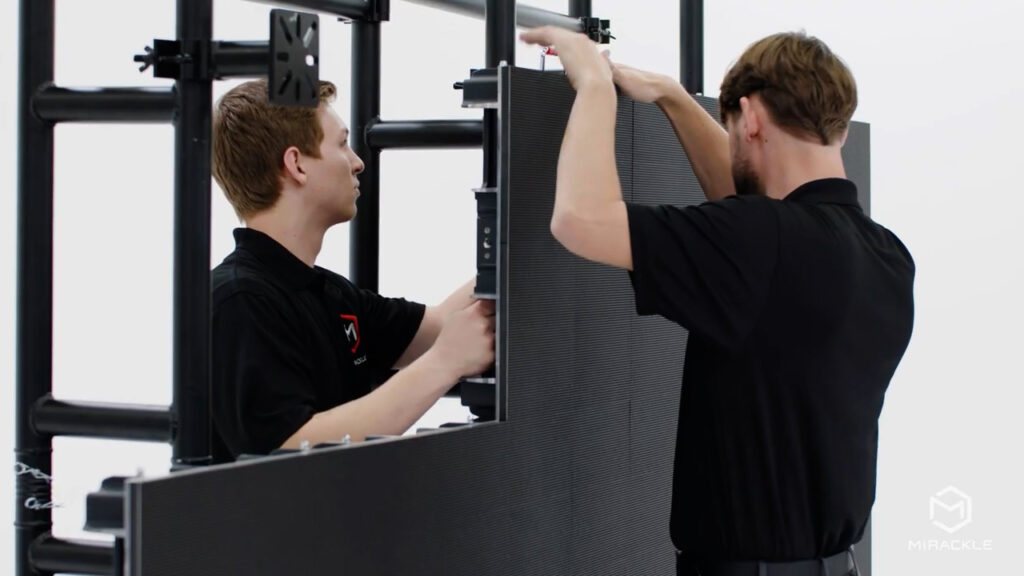
When custom LED panels come to life, the viewer sees color, brightness, and motion. What remains hidden is the structural framework that keeps the image aligned and stable. The cabinet is more than a housing: it affects physical integrity, thermal behavior, serviceability, and long-term durability.
Today, die-cast aluminum and traditional iron cabinets can support LED displays that look similar from the front. The real difference appears in the mechanics: weight, dimensional accuracy, assembly speed, maintenance access, and resistance to long-term structural stress.
For Mirackle’s engineers, integrators, and project managers, these differences are practical, not theoretical. Choosing the right cabinet means matching the frame to the installation, the mounting method, expected service demands, and operating environment.
The Cabinet Matters More Than Most Buyers Realize
What Changes Once the Screen Gets Bigger
On a small system, minor differences in weight, rigidity, or manufacturing tolerance may go unnoticed. Across large LED video walls, however, small deviations can accumulate from cabinet to cabinet, creating mechanical stress, module misalignment, or visible seams.
Precision vs. Structural Simplicity
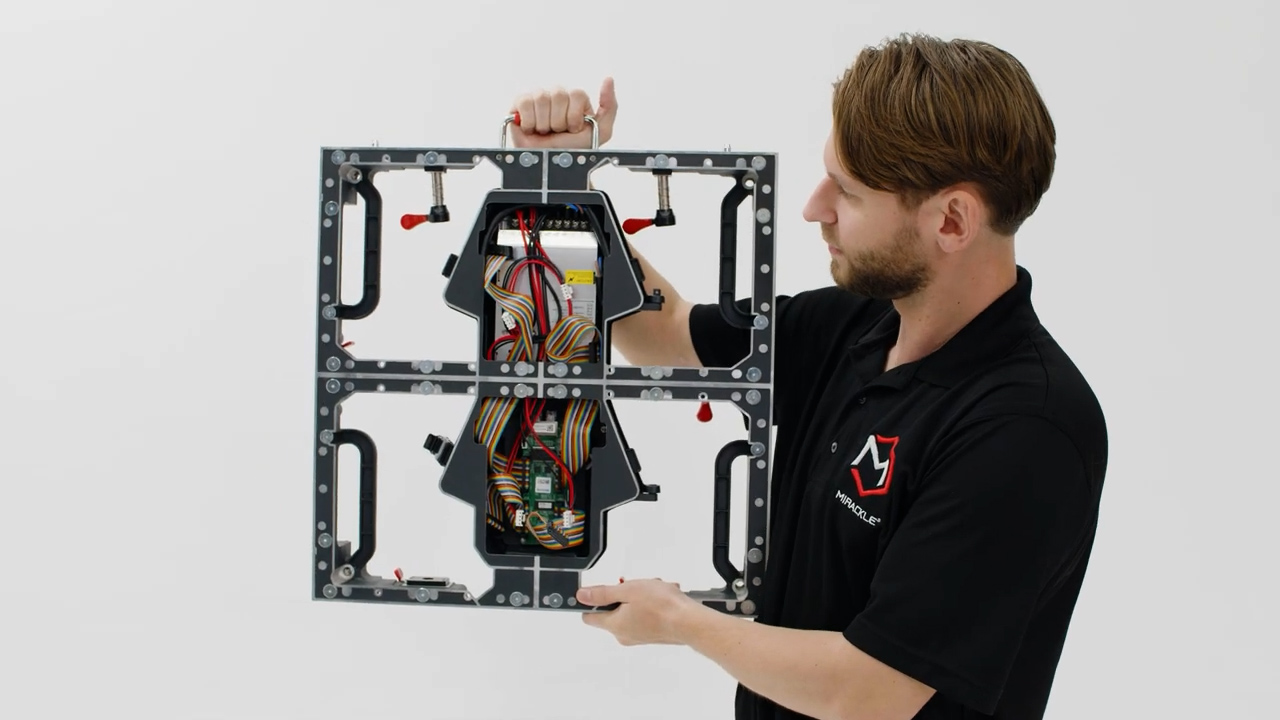
Die-cast aluminum is designed for tight dimensional consistency, lower weight, and precise cabinet-to-cabinet alignment. Those characteristics make it especially useful when LED display panels must form a clean, uniform surface across a large installation.
Iron cabinets generally offer a solid structure and a more economical construction approach. They can be well suited to fixed projects where low weight and frequent reconfiguration are not primary concerns.
Neither option is universally better. The right choice depends on scale, mounting method, service frequency, budget, and operating conditions rather than on material alone.
The Image Is Only as Seamless as the Frame Behind It
Resolution, refresh rate, brightness, and viewing angle matter, but mechanical precision still shapes what the audience actually sees. Even high-performance LED screens can show uneven seams if the underlying cabinets are not aligned correctly.
Small inconsistencies in the frame can create gaps, shadow lines, or uneven module edges. A seamless image depends on keeping every cabinet on the same plane, especially as the installation grows.
Different Projects Put Different Pressure on the Frame of the LED Wall
Permanent Installations Play by Different Rules
For installations expected to operate for years (such as corporate spaces, houses of worship, control rooms, retail environments, or hospitality venues), long-term structural stability becomes the priority. These systems may not move often, but they must remain aligned through heat cycles, dust, humidity, and routine service.
Depending on the application, protection ratings such as IP45 for indoor LED walls or IP65 for outdoor LED displays may also matter. A properly engineered fixed structure can make heavier iron cabinets a practical choice when the supporting architecture is designed for the load.
Temporary and Touring Installations Reward Mobility
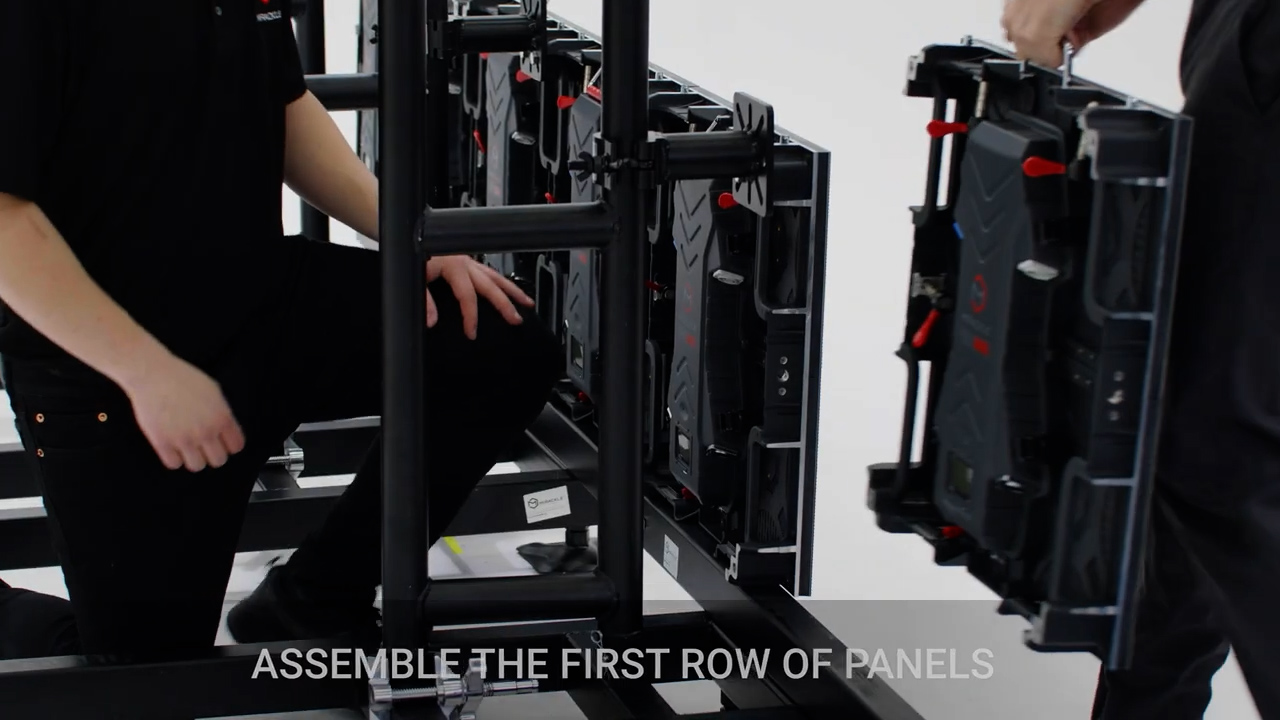
Live events, audiovisual settings, and rental operations place different demands on LED panels for virtual productions. Fast setup, lower transport weight, and repeated assembly become part of the daily workflow, which is why die-cast aluminum is common in mobile systems with quick-lock hardware.
Mounting Method Changes the Equation
The installation method changes how much weight and precision the frame must manage. Ground-supported, wall-mounted, and flown systems each place different demands on the cabinet.
With ground support, a rigid and level base is essential because small alignment errors at the bottom can travel through the entire structure. For large LED walls, careful leveling is often as important as cabinet strength.
For wall-mounted systems, lower weight can simplify anchoring and reduce stress on the supporting surface. Precise cabinet geometry also helps installers maintain a flat finished plane.
With flown systems, weight becomes a direct engineering and safety consideration. Reducing suspended load while maintaining structural strength is critical, especially when large arrays are attached to overhead rigging.
What Happens Behind the LED Screen Matters Too
A Cabinet Is Part of a Larger Visual System
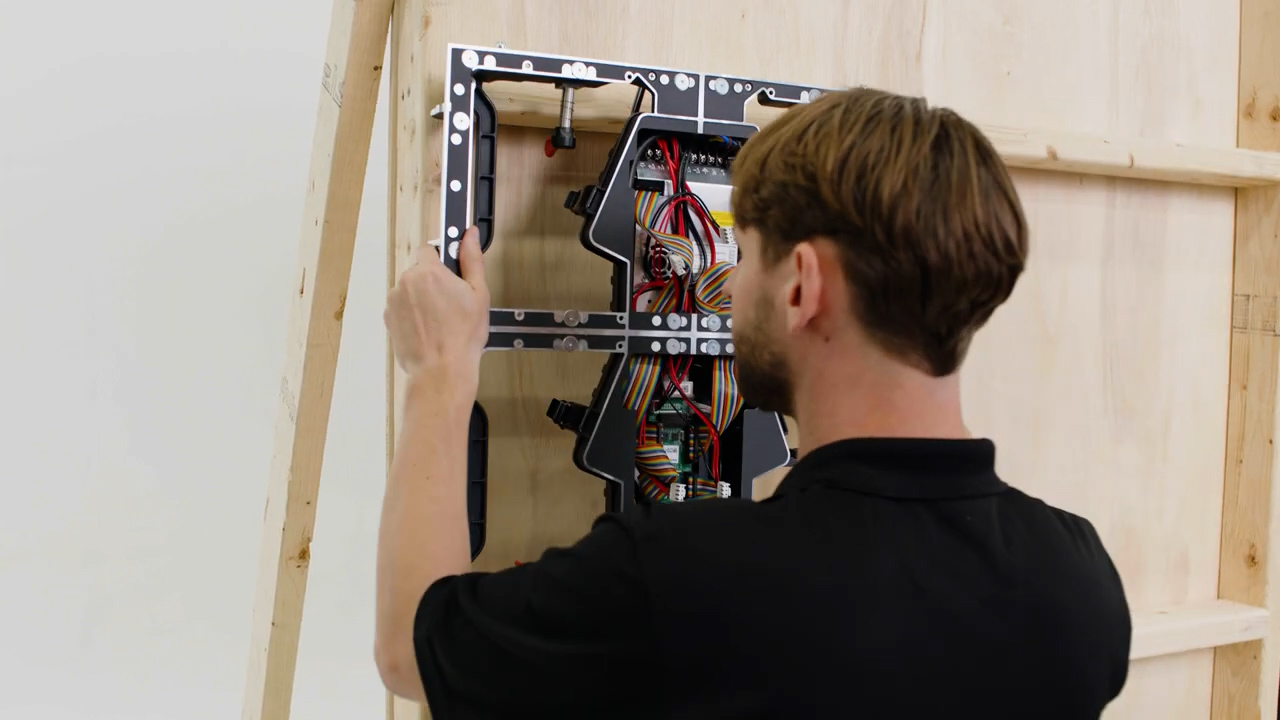
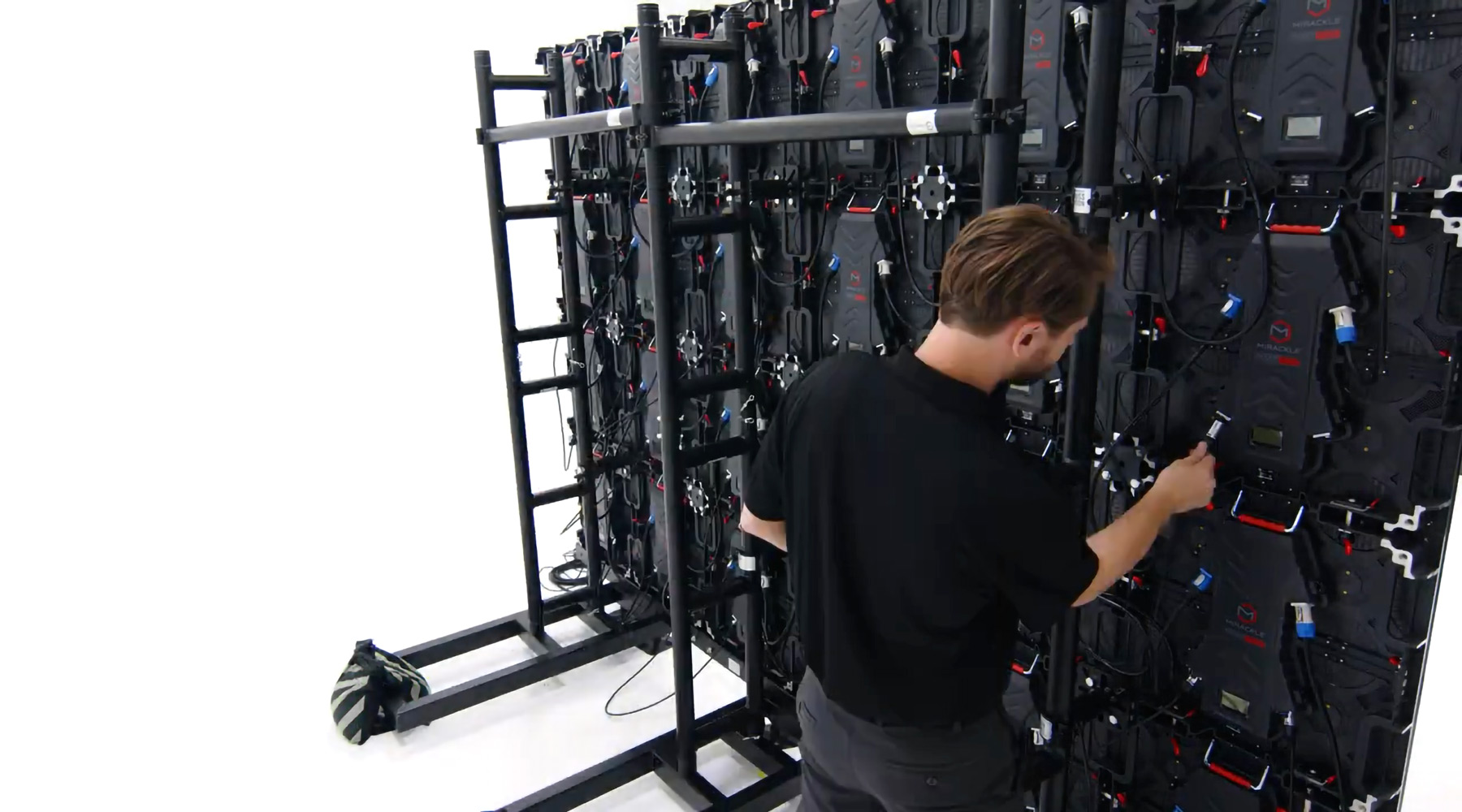
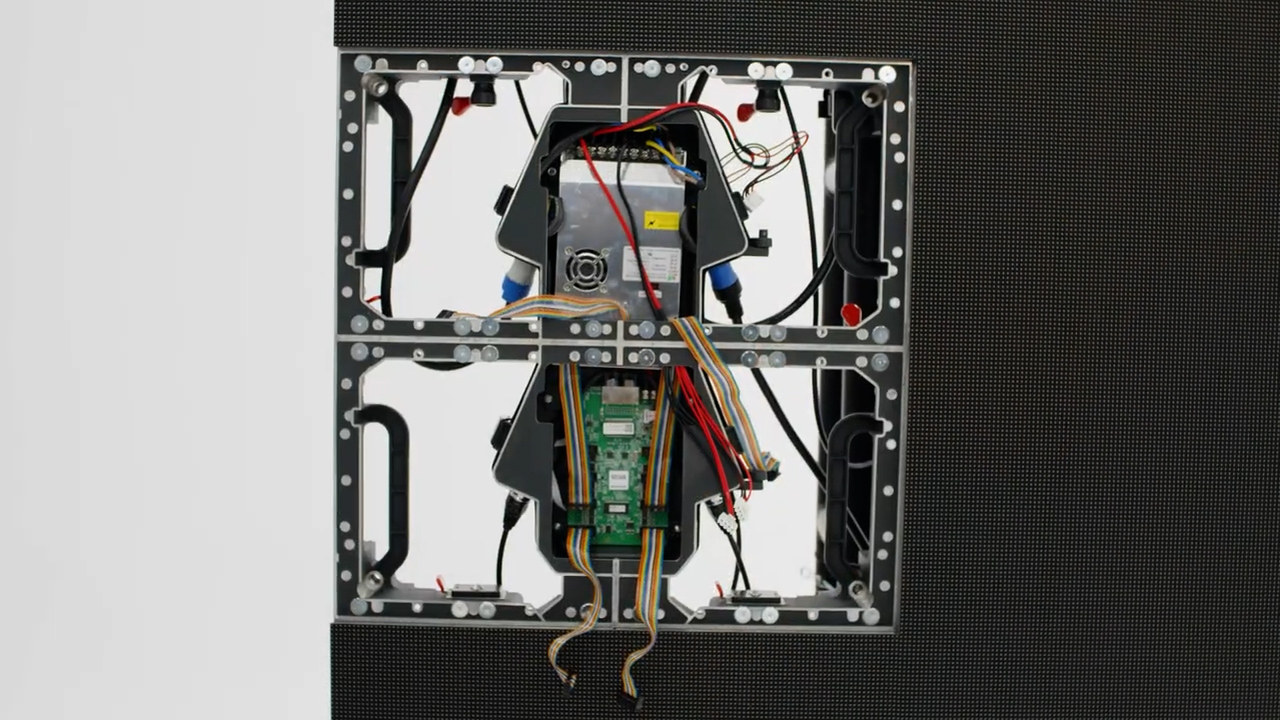
A cabinet is only one part of the system. Inside it, modules, receiving cards, power supplies, data cabling, and control hardware must work together. The frame protects these components while supporting airflow, cable routing, and service access.
The reliability of LED devices also depends on how efficiently heat and internal components are managed. Good cabinet engineering supports stable operation without adding unnecessary complexity, while well-designed LED technology helps the complete system perform consistently.
Content Must Reach the Wall Somehow
The image on LED displays begins with a signal source and moves through a control chain before reaching the modules. Reliable signal flow is just as important as the physical frame.
Computers, media servers, cameras, network players, switchers, and processors may all be part of the workflow. These devices handle scaling, color management, refresh control, routing, and real-time content delivery before the signal reaches the receiving cards.
Performance Changes with the Environment
Real installations rarely operate under ideal conditions. Temperature changes, humidity, dust, and vibration can all affect LED display panels over time. The cabinet must protect alignment and internal components as conditions change.
Material selection therefore becomes a practical engineering decision. Aluminum can help reduce weight and support thermal management, while iron can provide a robust fixed structure when mobility is less important.
Maintenance Can Matter More Than the Initial Installation
Service Access Changes the Economics of a Display
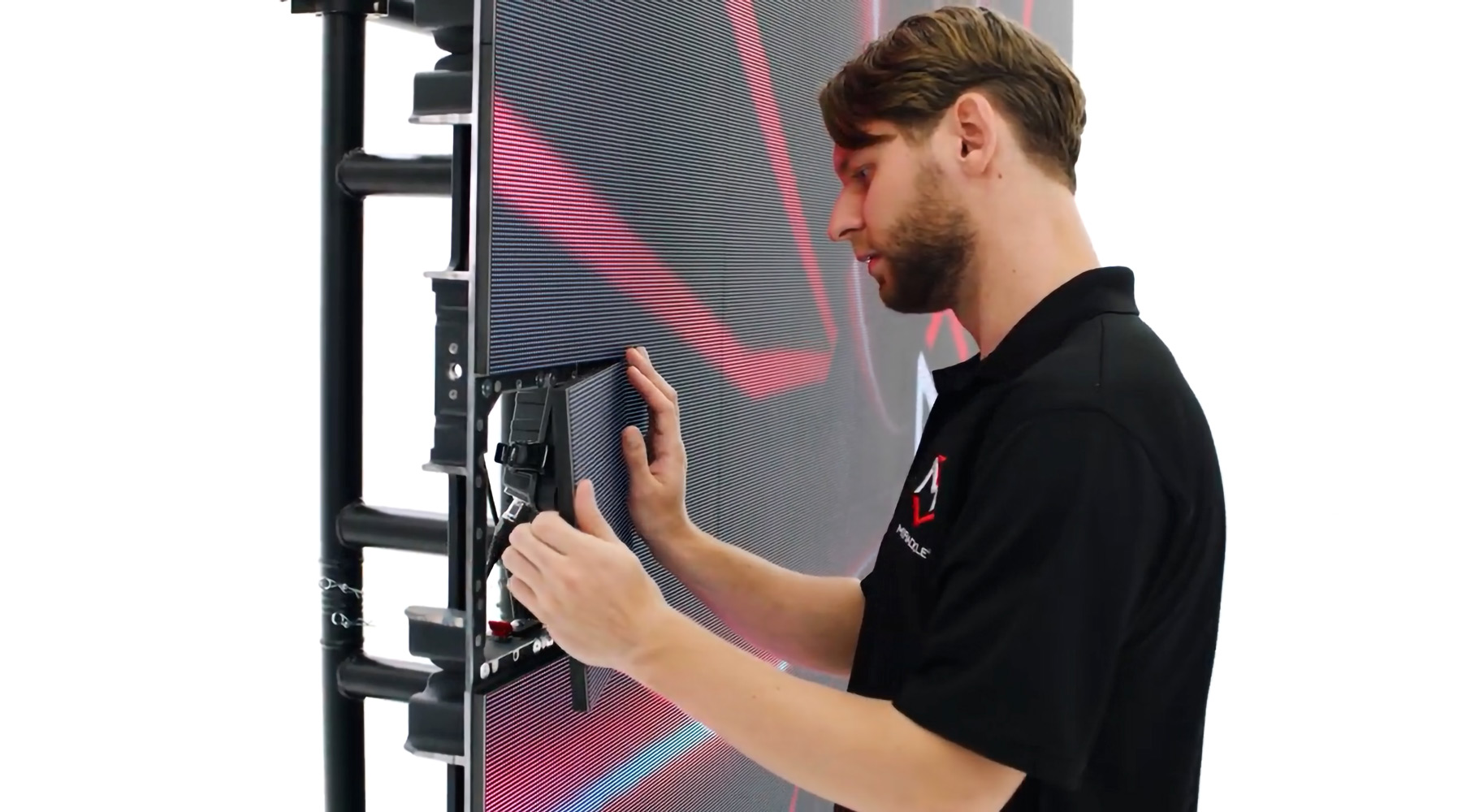
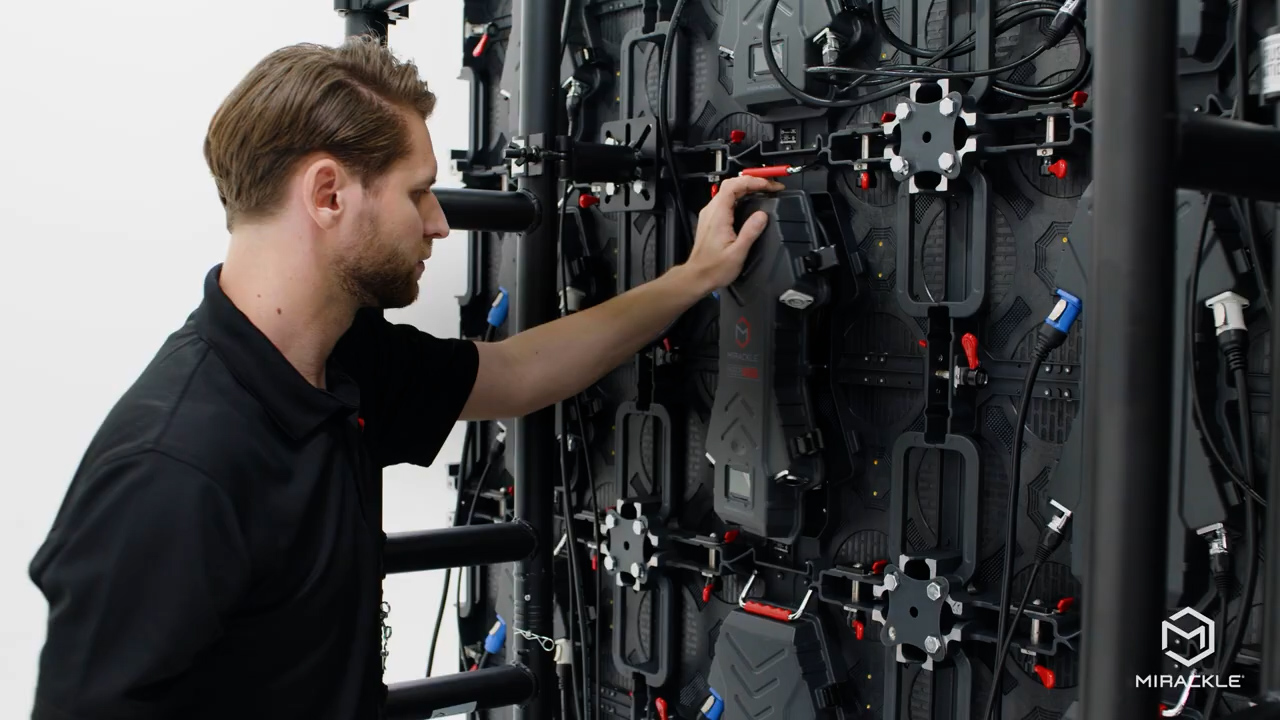
Two LED screens can look identical from the front but require very different service procedures. Front-access modules, removable power supplies, and accessible internal hardware can reduce repair time and labor, especially when rear access is limited.
Downtime Comes at a Cost
In retail, advertising, corporate environments, hospitality, and live entertainment, downtime can interrupt communication, revenue, or the audience experience. Service-friendly cabinet design helps shorten maintenance windows and protect long-term return on investment.
Durability Is More Than a Stronger Cabinet
Durability depends on more than metal thickness. Reliable components, consistent manufacturing, technical support, and warranty coverage all contribute to long-term performance. Mirackle supports its LED solutions with warranty coverage of up to five years, helping customers plan for service and ownership with greater confidence.
The Better Cabinet Is the One That Fits the Project
The best choice starts with the project requirements, not with a blanket preference for one material. Weight, precision, installation method, service access, and budget should be evaluated together.
Die-cast aluminum is a strong fit for LED video walls that require frequent handling, accurate alignment, or lower suspended weight. Its advantages become most valuable when mobility and precision directly affect installation efficiency.
Iron cabinets remain a practical option for fixed LED walls where the supporting structure can accommodate the load and repeated transport is not required. Their value comes from simplicity, rigidity, and cost efficiency in the right application.
Ultimately, the better cabinet is the one that supports the project without adding unnecessary weight, cost, or complexity. Good engineering is not about choosing the most expensive frame—it is about choosing the one that fits the job.
Because for LED video walls, success isn’t judged the day they turn on. It’s judged every day they keep performing without becoming a problem.