
How Diode Selection Determines LED Panel Quality
Two LED displays can list nearly identical specifications and still deliver very different results. The difference often begins at the component level, with the diode shaping color accuracy, brightness, efficiency, and long-term reliability.
In LED display panels, the diode acts as the core light source. Its manufacturing quality, encapsulation, and binning process influence color uniformity, calibration, power consumption, and heat management.
For buyers comparing LED video walls, specifications alone do not tell the full story. Understanding diode selection helps reveal whether a product is built for dependable commercial use or short-term performance.
Why the Diode Is the Heart of an LED Screen
LED screens contain millions of individual points of light, each dependent on a stable diode. A weak or inconsistent component can quickly affect brightness, color balance, and the overall viewing experience during extended operation.
Color Consistency Across the Entire Screen
One of the greatest manufacturing challenges is ensuring that millions of diodes produce the same hue and brightness. Rigorous binning groups components with closely matched performance, helping the finished system appear seamless.
When binning standards are inconsistent, several problems may become visible:
- Uneven brightness: Lighter or darker areas can make content look worn or poorly calibrated.
- Inconsistent whites: Sections may shift toward blue, yellow, or pink.
- Cabinet-to-cabinet variation: Neighboring sections may display slightly different colors.
- Visible seams: Small intensity differences can break the illusion of one continuous image.
Brightness Without Sacrificing Image Quality
More brightness does not automatically mean better performance. LED panels must produce strong light output while preserving balanced color, deep contrast, and clear detail. Excessive brightness can wash out colors, turn blacks gray, and create visual fatigue.
Automatic brightness control makes LED solutions more practical throughout the day. The system can increase output in strong ambient light and reduce intensity at night or in darker indoor settings.
Efficiency, Heat, and Long-Term Stability
Heat is one of the main causes of stress in electronic components. High-efficiency LED displays generate the required light with less power and less waste heat, which helps protect receiver cards, power supplies, solder joints, and internal circuitry.
Lower operating temperatures also support stable performance during live events and continuous use. Over time, better thermal management helps preserve brightness, color consistency, and service life.
How Diode Quality Shapes the LED Wall Viewing Experience
The value of custom LED video walls becomes clear in real-world viewing conditions. Component quality influences how comfortably and accurately audiences see text, motion, color, and fine detail.
Sharp Images at the Right Viewing Distance
The diode package must match the selected pixel pitch and overall resolution. When those elements are properly aligned, content appears clean at the intended viewing distance without unnecessary pixelation or loss of definition.
High-quality LED screens maintain legible text, sharp edges, and consistent detail. This is especially important in close-viewing environments, where minor component differences are easier to notice.
Smooth Motion for Live Events and Cameras
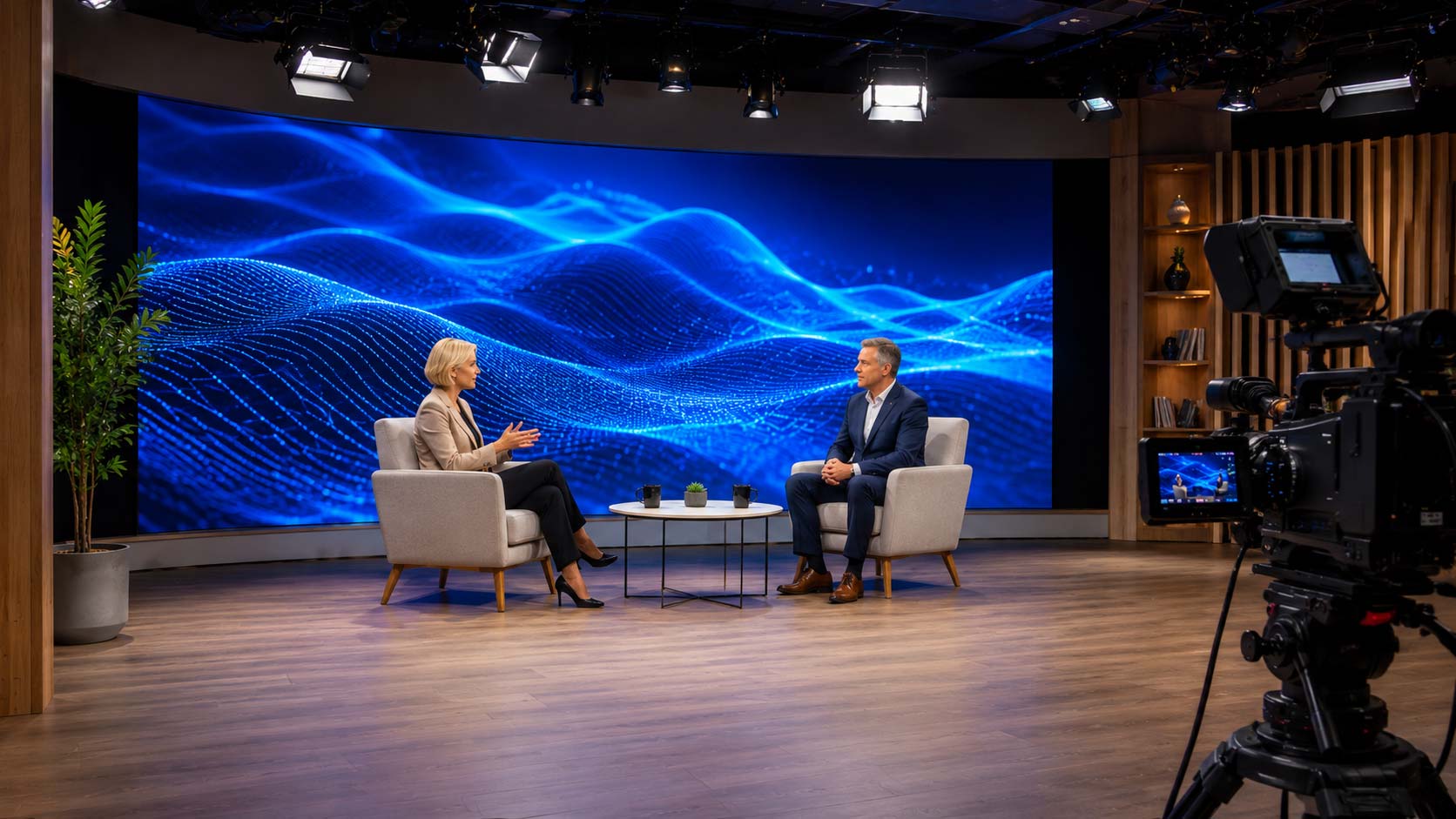
LED display panels are often viewed through professional cameras and smartphones as well as by the human eye. Diode performance and control electronics work together to support the required refresh rate.
For broadcasts, worship services, conferences, sports, and concerts, a refresh rate of 3,840 Hz or higher can help reduce flicker, black lines, and motion artifacts. This creates smoother content for both in-person and remote audiences.
Visibility From More Than One Position
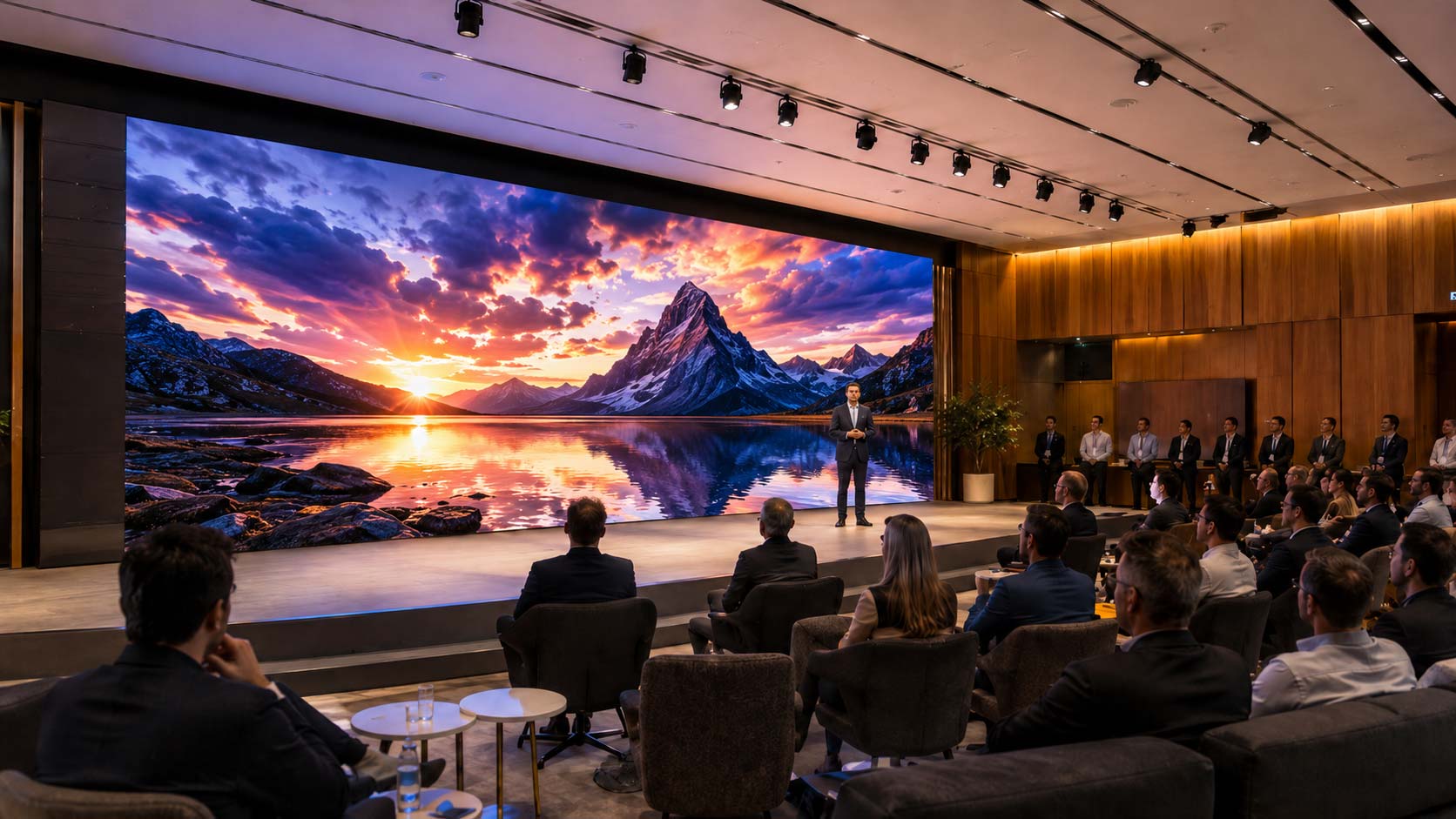
Audiences rarely stand directly in front of the center of LED panels. Diode architecture and packaging affect the viewing angle, determining how well brightness and color hold up from the sides.
Premium components may support horizontal and vertical viewing angles between 140° and 160°. A wider angle helps maintain visual consistency across auditoriums, retail spaces, conference rooms, and other large venues.
LED Technology Performance Beyond the Image
Image quality is only part of the equation. Like other commercial LED devices, LED walls must also respond reliably to environmental demands, operating schedules, and maintenance needs. A strong visual result has limited value if the equipment cannot perform consistently.
Built for Indoor and Outdoor Environments
LED screens require protection suited to their installation environment. The enclosure, sealing, and component selection must work together to guard the internal electronics.
- IP45 protection: Suited to demanding indoor LED wall environments where additional resistance to dust and moderate water exposure may be needed.
- IP65 protection: Designed for outdoor LED screen conditions involving heavy dust, rain, and direct water exposure.
Easier Service Means Less Downtime
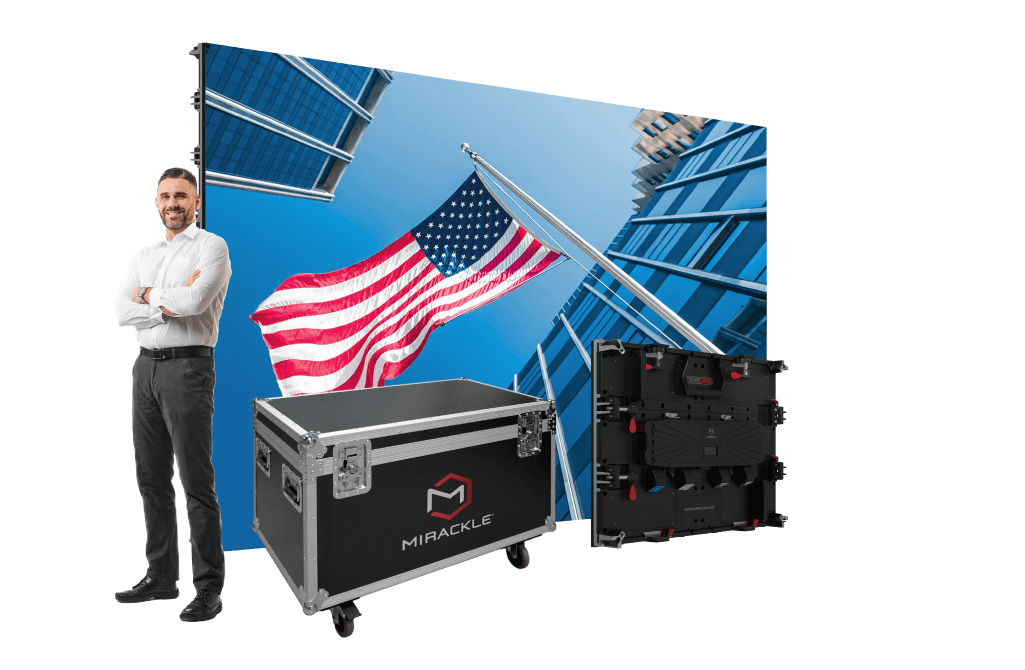
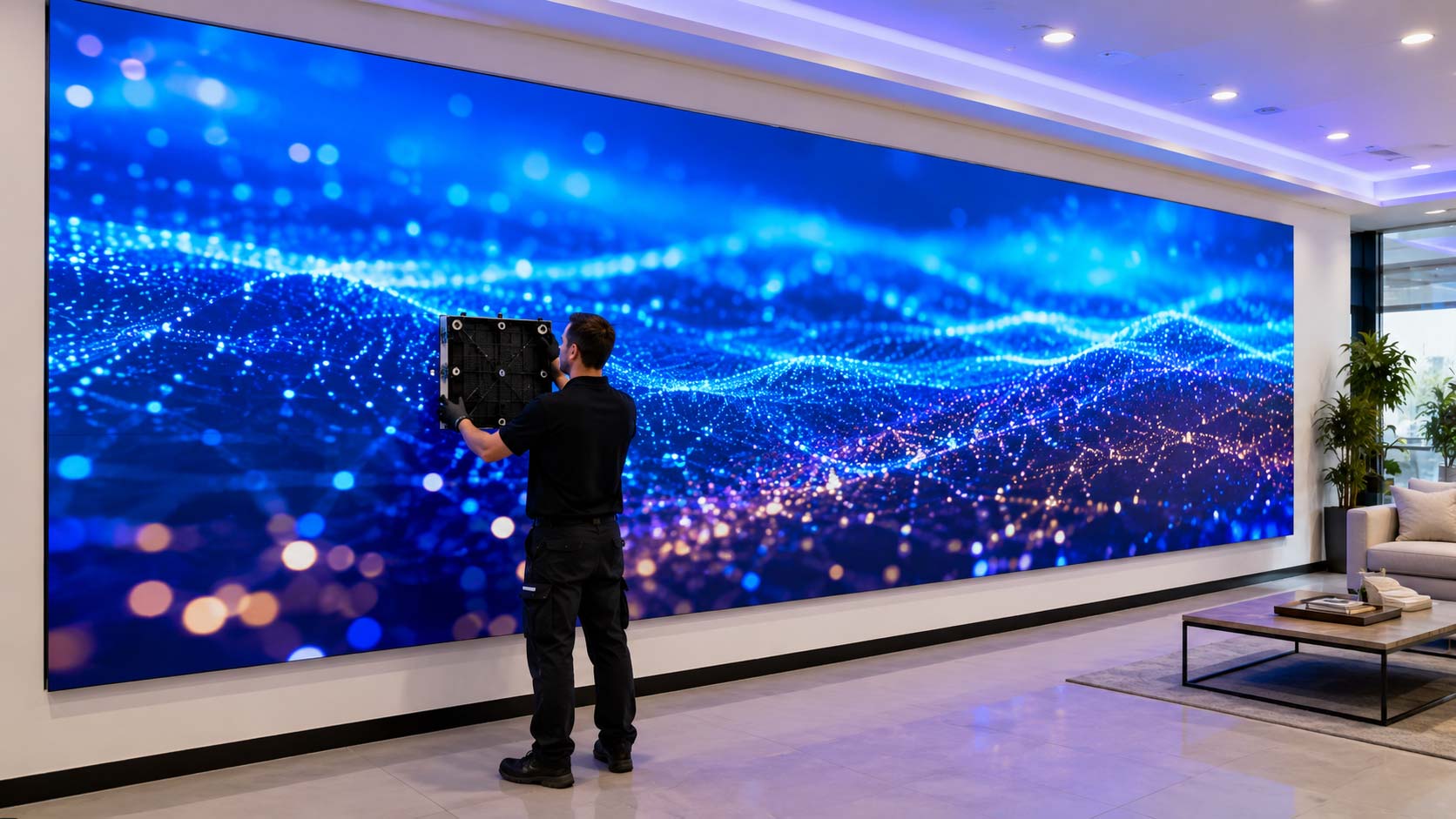
In retail, events, and commercial environments, service interruptions can affect visibility and revenue. LED display panels with full front service allow technicians to reach modules, cards, and power supplies without rear access. This can significantly reduce repair time in wall-mounted installations or areas with limited space.
Magnetic modules also allow damaged parts to be removed and replaced from the front. Faster access means fewer disruptions and more predictable maintenance.
The Technology Working Behind Every Diode
Even high-quality diodes depend on a coordinated control system. LED walls use processors, sending cards, and receiving hardware to manage millions of pixels in real time. Each component must communicate accurately to preserve resolution, brightness, refresh rate, and calibration.
- Video processors scale source content to the exact display resolution.
- Sending cards distribute the processed signal to each cabinet.
- Synchronous systems support real-time content for live events and conferences.
- Asynchronous systems store content for scheduled or independent playback.
Choosing a Panel for Real-World Value
LED video walls should be evaluated as long-term business infrastructure. The best choice balances visual performance, structural requirements, maintenance, energy use, and expected return rather than focusing only on the purchase price.
The mounting method also affects how LED panels must be configured:
- Ground-supported systems work well for temporary events and stages.
- Wall-mounted systems benefit from lightweight cabinets, front access, and efficient heat dissipation.
- Flown systems require dependable structural integrity for rigging and suspended installations.
Generic products may reduce the initial cost, but low-quality diodes can lead to frequent repairs, higher power consumption, and visible inconsistencies. Those issues can weaken brand presentation and increase operating expenses over time.
To assess the real return on investment of LED walls, buyers should consider four factors:
- Service life: Premium diodes are designed to maintain brightness and color consistency for extended operating periods.
- Energy consumption: Efficient components produce more usable light with fewer watts.
- Maintenance needs: Stable components can reduce service calls and module replacements.
- Downtime: Every interruption can affect advertising, events, communication, or customer experience.
At Mirackle, we provide high-performance LED displays engineered for demanding commercial applications. Our team evaluates each project carefully to recommend the right configuration for the space, content, operating conditions, and installation method. Mirackle products are backed by a five-year warranty, expert technical support, and clearly defined coverage designed to protect long-term performance.
Because for LED video walls, success isn’t judged the day they turn on. It’s judged every day they keep performing without becoming a problem.