

The commercial display market is moving fast, and the terminology can get noisy. For manufacturers, system integrators, and B2B buyers, the real challenge is separating useful technical information from sales language. Two of the most common terms in premium LED video walls today are MicroLED and COB, or Chip-on-Board.
Although they are often placed in the same “next-generation” category, they are not the same thing. Each approach affects manufacturing cost, durability, maintenance, image performance, and long-term value in a different way. Choosing between them should never come down to which name sounds more advanced.
This guide breaks down the practical differences, advantages, and limitations of both technologies. The goal is simple: understand which option better fits your viewing distance, budget, service plan, installation environment, and quality expectations before making a purchasing decision.
MicroLED or COB LED Panels: Understanding the Differences
MicroLED Is Often Associated With Premium Image Performance
In the display industry, MicroLED is usually tied to top-tier image performance. Because it uses extremely small chips, the technology can support deep contrast, strong black levels, and impressive luminous efficiency when it is manufactured and calibrated correctly. That is why it is often considered for premium LED walls where image quality is a major priority, especially in flagship LED video walls.
However, buyers should be careful not to treat the word MicroLED as a guarantee. Its real value depends on the manufacturer, the precision of the production process, chip transfer accuracy, calibration quality, and the intended application. A poorly built or poorly calibrated product can lose its advantage quickly, even if the technology itself is impressive.
COB Focuses on Protection and Panel-Level Practicality
COB takes a more practical engineering approach. By mounting chips directly onto the board and covering them with a protective resin layer, the design reduces exposure to dust, humidity, static electricity, and low-intensity impact. This makes COB especially useful for commercial spaces where equipment is handled often or installed near the public.
That added protection is one reason COB is widely considered for LED displays used in rental environments, retail settings, corporate spaces, and high-traffic interiors. It may not always deliver the same ultra-premium black level associated with the best MicroLED systems, but it often provides a stronger balance between durability, cost, and serviceability.
Maintenance also tends to be more predictable. Instead of complex pixel-level repair, many COB systems are serviced at the module level by trained technicians. For businesses that need reliable operation from LED walls with fewer interruptions, that practical advantage can matter as much as image quality.
Buyers Should Compare Use Cases, Not Buzzwords
The most common buying mistake is choosing a technology because it sounds newer, sharper, or more exclusive. A smarter process starts with the real conditions of the project: where the product will be installed, who will maintain it, how close viewers will be, and how often the LED display panels will operate.
- Viewing distance and pixel pitch: Will people stand close enough to read fine text, or will they see the content from several feet away?
- Environmental exposure: Will the installation sit in a protected control room, a public corridor, a lobby, or a semi-outdoor space?
- Service access: Can local technicians handle maintenance, or will the project depend on factory-level support?
- Camera performance: For broadcast or virtual production, will the system control reflections, flicker, and moiré?
- Budget and scale: Can the chosen solution grow into a larger format without creating unsustainable costs?
The best choice is not automatically the most expensive one. It is the option that matches the technical, visual, financial, and logistical demands of the space.
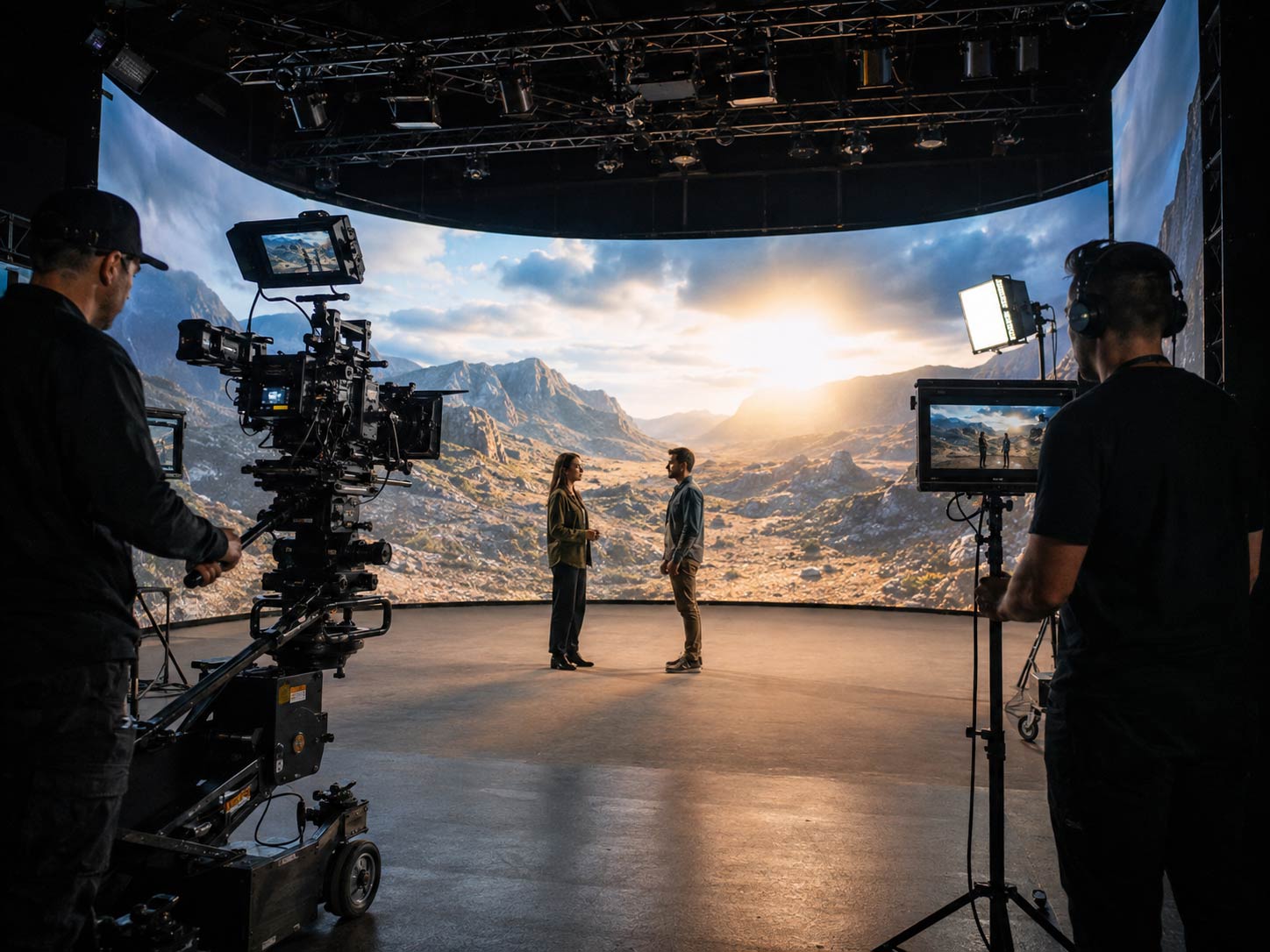
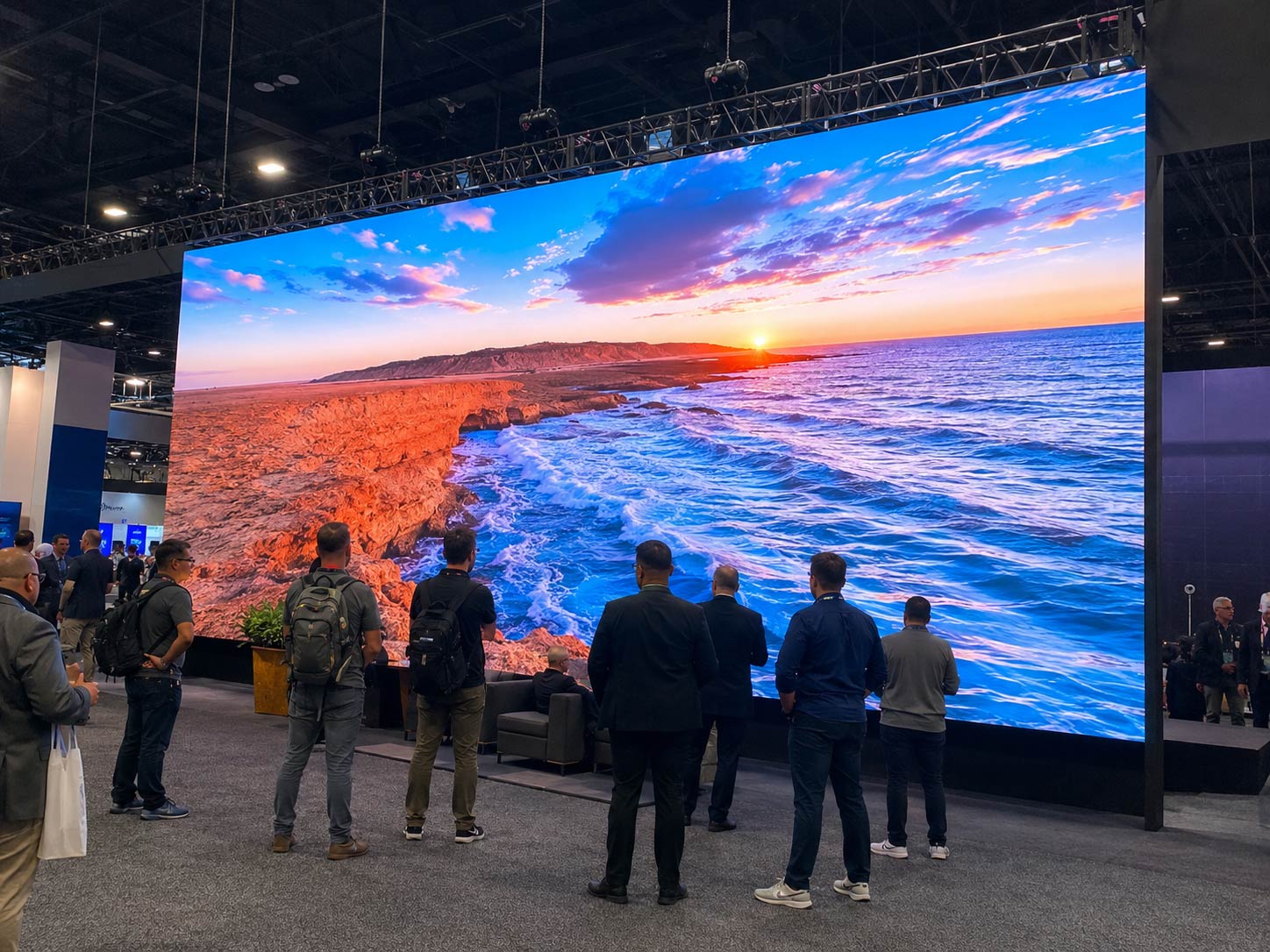
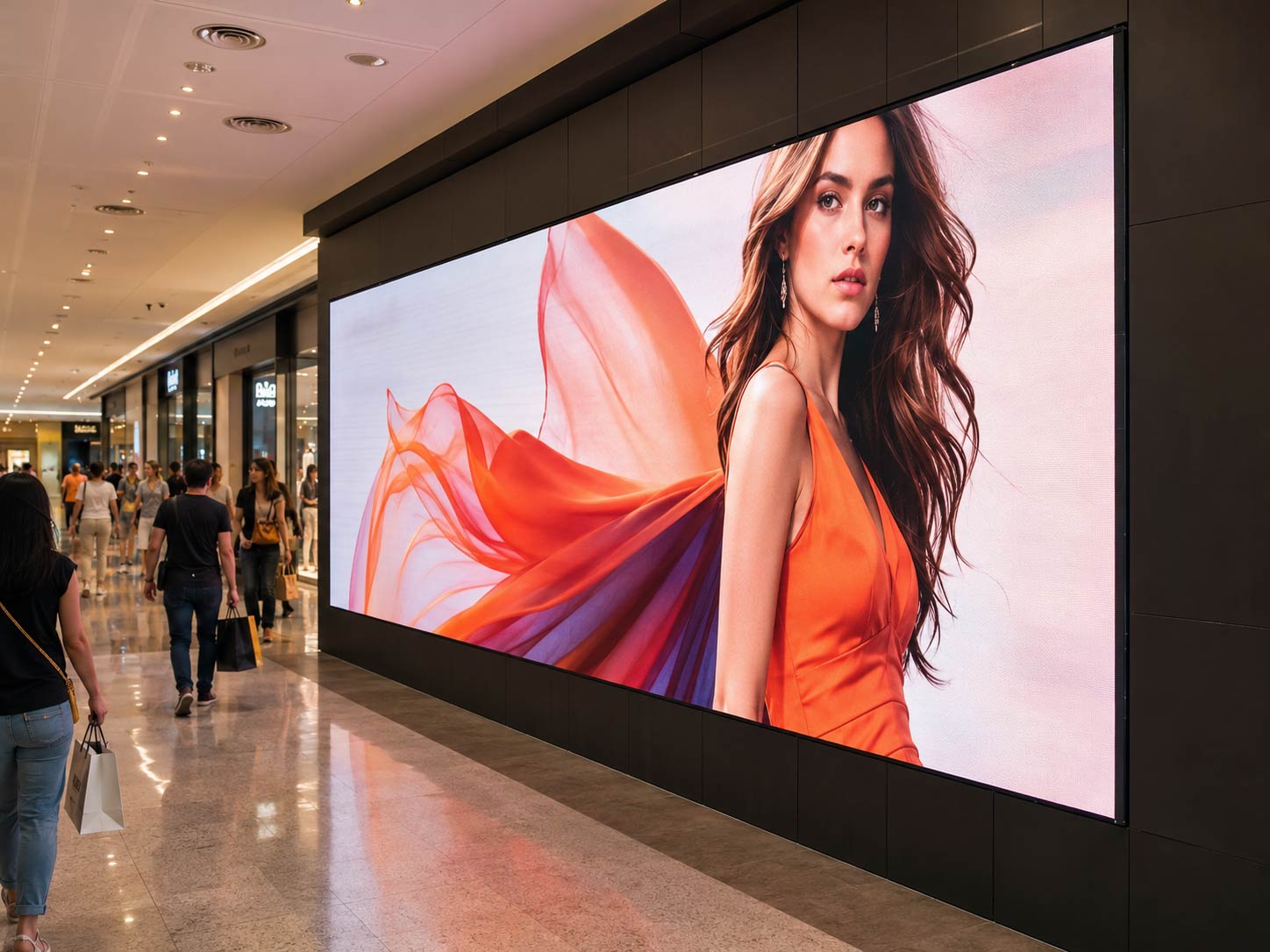
Image Quality Depends on More Than the LED Type
Pixel Pitch Still Defines Viewing Distance
Whether a project uses MicroLED or COB, pixel pitch remains one of the most important specifications. Pixel pitch measures the distance, in millimeters, between the centers of two adjacent pixels. It determines how close viewers can stand before they begin to notice image structure, a core issue for fine-pitch LED display panels.
LED screens for virtual productions, corporate lobbies, and premium retail stores, may work well with pitches from 1.2 mm to 1.8 mm, depending on the viewing distance and content. That range can protect visual impact while keeping the budget more realistic than an unnecessarily dense configuration.
Resolution Has To Match the Real Application
Resolution should be chosen according to the screen size, content type, and audience distance. Not every project needs the same level of detail, even when the sales conversation focuses on 4K or 8K.
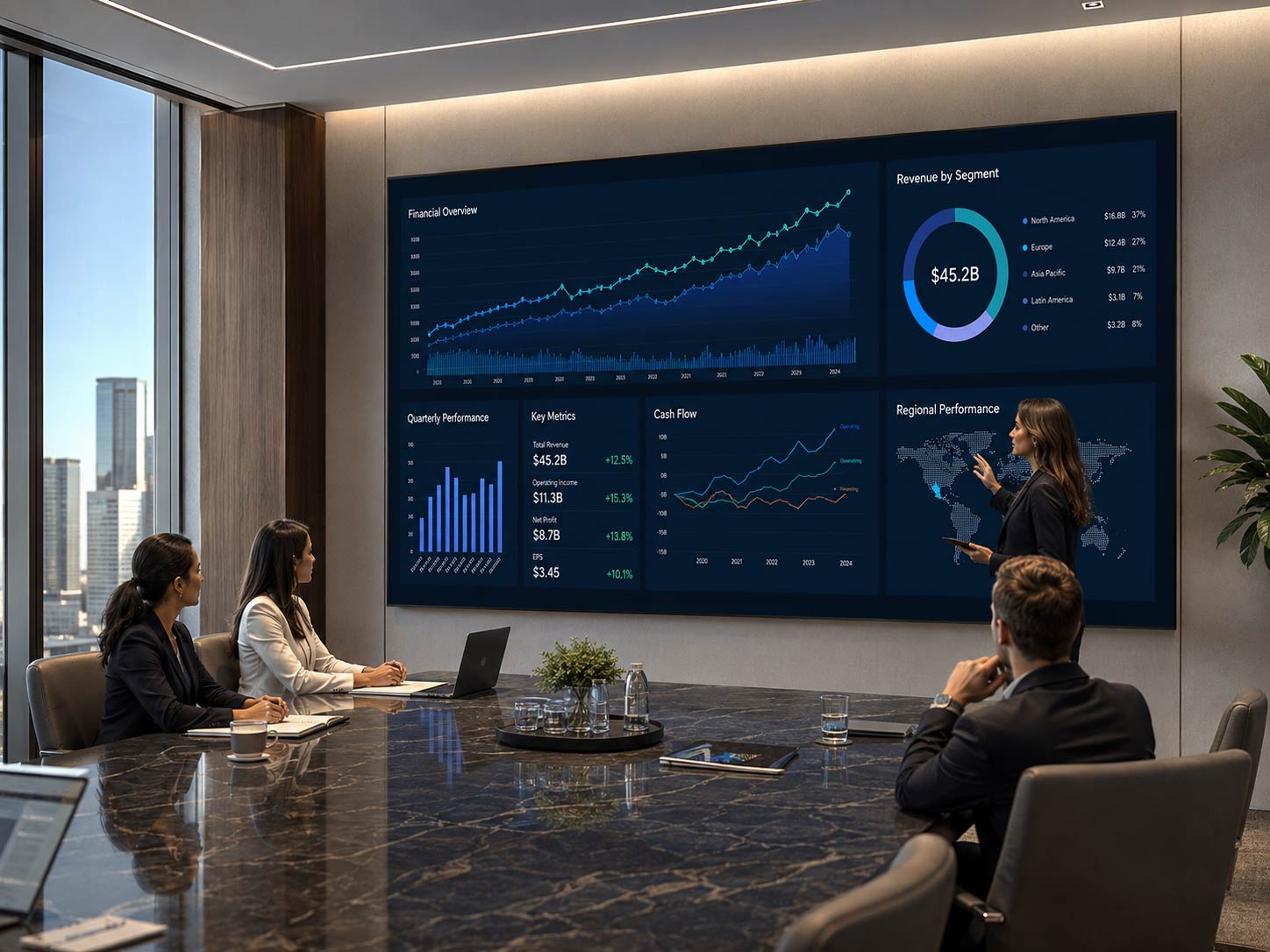
For example, LED screens used in conference rooms for financial data, dashboards, or executive presentations need excellent native resolution so numbers and small text remain legible. LED displays in shopping malls, by contrast, may prioritize brightness, scale, and motion because the audience is usually moving and viewing from farther away.
Studio backgrounds require a different balance. The image must feel natural on camera, integrate with the physical set, and avoid perspective problems that can make the scene look artificial.
Refresh Rate Is relevant for Motion and Cameras
Refresh rate, measured in hertz, describes how many times per second a display updates its image. For professional use, it affects motion quality, playback smoothness, and camera performance.
For standard commercial signage, 1920 Hz may be sufficient. For filmed environments, including broadcast, live events, and virtual production, higher refresh rates, often above 3840 Hz, are usually preferred because they help reduce flicker, scan lines, and other visible artifacts when the system is captured by professional cameras.
Real-World LED Tech: Built for Durability, Designed for Easier Maintenance
Protection Can Influence Long-Term Value
Durability is one of COB’s strongest advantages. Because the chips are protected by a resin layer, the risk of damage from light contact, cleaning, or handling is reduced compared with more exposed structures.
Environmental protection should also be reviewed through the IP rating. For enclosed public spaces such as malls, airports, and transit stations, indoor LED walls IP45 can be appropriate where protection against small solids and low-pressure water exposure is needed. For outdoor LED screens, IP65 is usually preferred because it provides dust-tight protection and resistance to water jets.
Better-protected LED walls can reduce downtime, damaged modules, and unexpected service costs. That is especially important for rental companies, venues, and public-facing installations where reliability has a direct impact on revenue.
Maintenance Should Be Evaluated Before Purchase
Many buyers focus on showroom performance and forget to ask how repairs will work on-site. That can become expensive if a simple failure requires dismantling part of the structure or leaving the space unusable for hours.
For large-format LED display panels, a Full Front Service design can make maintenance far more practical. Components such as modules, receiver cards, and power supplies can be accessed from the front, reducing the need for rear service corridors and making the final installation cleaner.
Magnetic modules can also speed up service when the system is designed for them. A trained technician can remove a damaged module with the proper tool, replace it with a spare, and restore content quickly without interrupting the entire display area.
Installation and System Design Can Change the Outcome
The Same Panel Can Perform Differently Depending on Installation
The same product can perform very differently depending on ventilation, ambient temperature, structure, and lighting. Heat management is critical because trapped heat can accelerate diode degradation, shift color performance, or shorten the life of power components.
Ambient lighting also changes the way viewers perceive contrast and brightness. A setting that looks excellent in a controlled room may feel washed out near a window or under aggressive lobby lighting. The support structure also matters, because poor alignment or slight deformation can affect image uniformity across LED video walls over time.
Mounting Method Should Match the Project
The mounting method affects safety, viewing experience, infrastructure cost, and future access. It should be decided early, not after the product has already been selected, because custom LED walls are shaped as much by structure as by pixels.
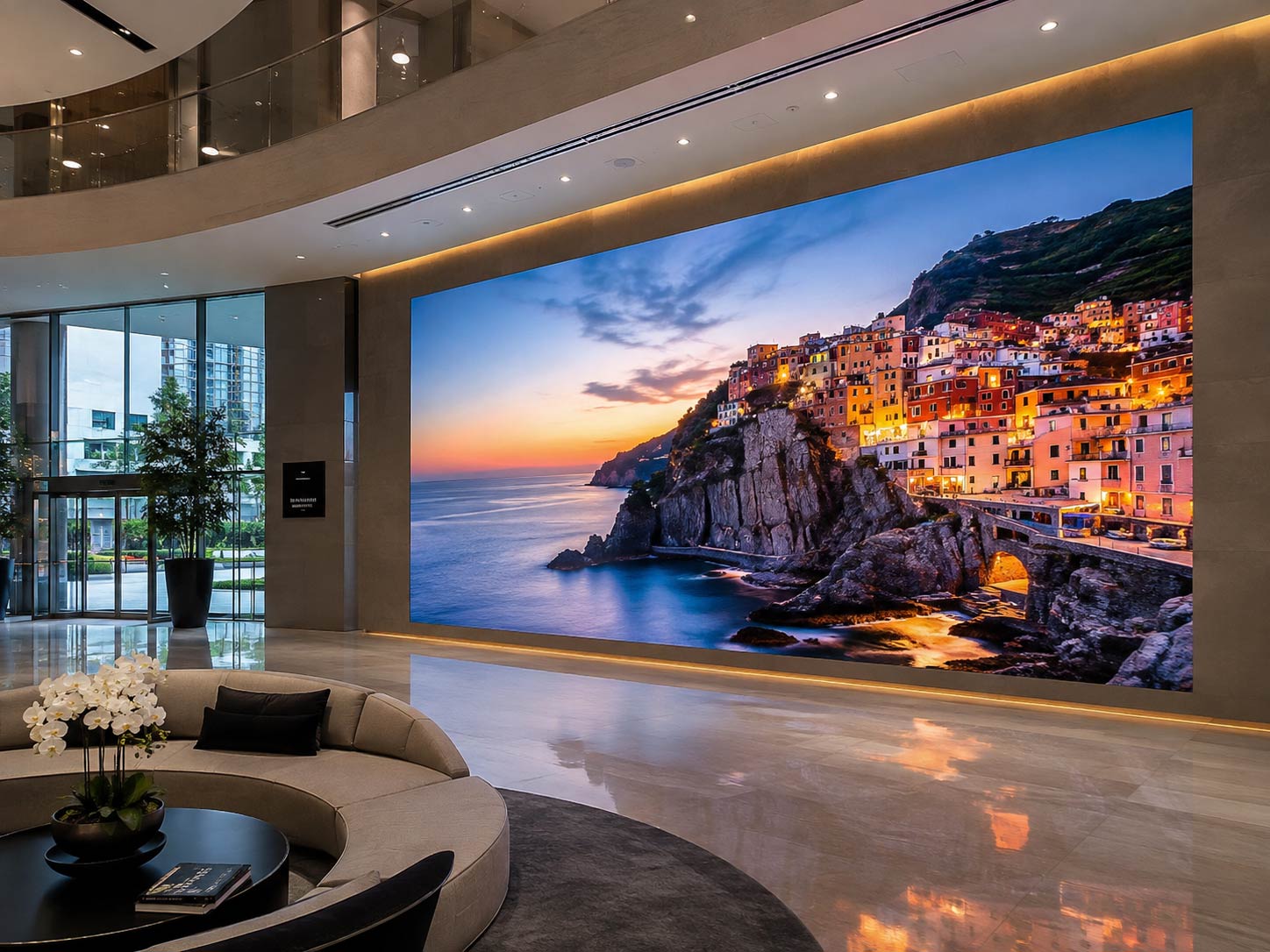
Wall-mounted systems are common for boardrooms, control rooms, retail spaces, and corporate environments. They create a clean look and can make the display feel integrated into the architecture, especially when front service is available.
Flown systems are suspended from overhead structures with certified hardware. They are useful in venues, studios, stages, and convention centers where floor space must stay open or the layout changes frequently.
Ground-support systems are built from the floor using a self-supporting structure. They are practical for temporary showrooms, events, and spaces where walls or ceilings cannot carry heavy loads.
LED Wall Technical Keys: Control, Integration, and Buyer Expectations
Processing Can Reveal the True Quality of the Display
A high-resolution product can still deliver a weak image if the video signal is poorly processed. This is where processors, sending cards, calibration tools, and content workflow become essential.
The video processor receives the input source, scales it to the native resolution, manages color, and prepares the signal for distribution. The sending card then translates that signal into data the cabinets can interpret with minimal latency.
In professional environments, brands such as NovaStar are widely used because they provide stable control hardware and precise calibration options. Good processing helps deliver smoother playback, cleaner gradients, and more consistent color across LED displays.
Synchronous and Asynchronous Systems Serve Different Needs
The control architecture determines how content is managed. This decision should reflect the workflow, not just the hardware package.
Synchronous systems mirror a live external source, such as a computer, media server, camera feed, or switcher. They are required for broadcast, live events, auditoriums, control rooms, and other applications where low latency and fast source switching are essential.
Asynchronous systems store and play content from the internal controller. They work well for digital signage, corporate lobbies, retail messaging, and multimedia facades where scheduled playback is more important than real-time control.
Integration Should Be Part of the Specification
Professional LED solutions need to fit into the larger technology ecosystem. That means reviewing video inputs, control software, media players, studio cameras, CMS platforms, cloud workflows, and media servers before finalizing the specification.
In modern corporate and commercial spaces, LED devices may also need to coordinate with lighting, audio, automation, or room-control systems. Planning for integration helps protect the investment and keeps the system scalable as the space evolves.


Choosing Based on ROI, Not Just LED Technology Labels
The Best Choice Depends on the Business Case
ROI is not measured the same way in every project. A control room values uptime, reliability, and low failure rates because downtime can affect operations.
A premium retail or hospitality space may measure ROI through customer attention, brand perception, and the quality of the visual experience. In that case, stunning content and consistent performance can support stronger engagement.
A corporate environment may focus on fewer service interruptions, predictable maintenance, and presentation readiness. For that reason, paying more for MicroLED only makes sense when the application truly benefits from its visual advantages. If COB meets the pitch, durability, and image requirements, it may be the better financial decision.
Manufacturers and Buyers Look at Value Differently
Manufacturers and integrators often evaluate value through production consistency, assembly efficiency, calibration time, and product differentiation. Their priority is delivering stable systems at scale without unpredictable manufacturing costs.
End users usually care more about day-to-day performance. They want dependable operation, reasonable spare-part costs, easy service access, and strong visuals under real lighting conditions.
Rental companies have another priority: survival through transport, setup, teardown, and repeated handling. For that market, COB’s physical protection can create immediate value by reducing damaged modules and service calls, even when a more delicate MicroLED product offers higher peak image performance.
A Smarter Purchase Starts With Better Questions
A strong purchase process goes beyond comparing product labels. Buyers should ask how the system will perform in the actual space, how it will be installed, who will service it, and what happens when parts are needed years later.
As a global manufacturer and supplier of LED panels, Mirackle helps businesses and institutions compare options based on real application needs, installation method, viewing distance, and long-term performance goals. That consultative approach helps prevent overspending on specifications that do not add practical value.
Warranty coverage should also be part of the financial risk review. A 5-year warranty can support business continuity, help ensure access to compatible replacement components, and reflect the manufacturer’s confidence in the stability of its products.
A smart purchase does more than reduce today’s cost. It protects tomorrow’s performance, serviceability, and return on investment.
Because for LED video walls, success isn’t judged the day they turn on. It’s judged every day they keep performing without becoming a problem.