
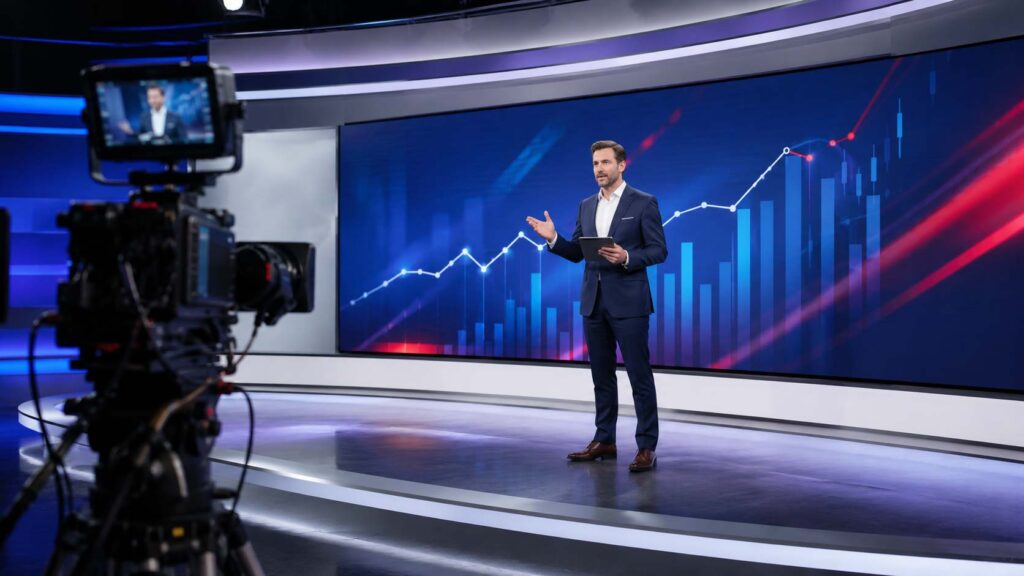
Not every display that looks impressive in person will perform well on camera. In broadcast and virtual production, the recorded image is the real test: color, motion, brightness, and fine detail must remain stable under professional cameras. A live audience may see smooth playback and vivid color while the camera captures flicker, banding, moiré, or exposure problems. The eye and the lens do not interpret light in the same way, so visual quality must be evaluated under actual production conditions.
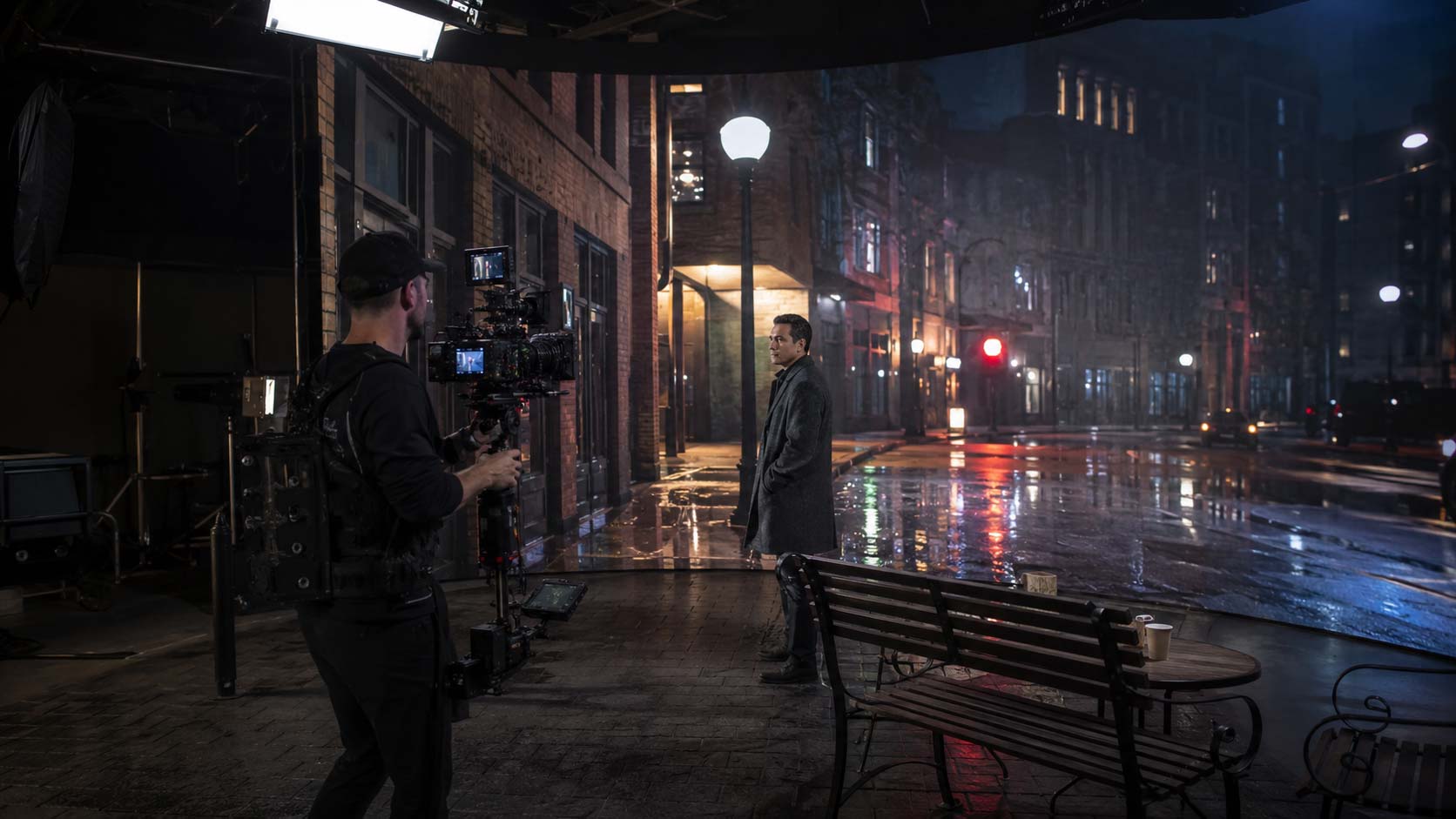
LED displays for virtual productions, television studios, XR stages, live streams, corporate productions, and virtual sets become part of a larger technical workflow. Cameras, lighting, processing, synchronization, and content must work together to create a natural final image.
Camera-Ready LED Walls Start with Image Stability
Refresh Rate Can Make or Break the Shot
The difference between standard LED screens and production-ready systems often becomes clear as soon as the camera turns on. A display can appear stable to the eye while a camera reveals flicker, scan lines, or other artifacts.
A high refresh rate reduces those risks and helps the image remain consistent as shutter speed, frame rate, camera angle, and lighting conditions change. This matters in interviews, live broadcasts, corporate studios, and any production where custom LED display panels remain visible for extended periods.
Refresh rate should never be treated as an isolated number. It must be tested with the cameras and settings used on set, because stable playback depends on the full capture and processing chain.
Resolution Must Match the Camera’s Perspective
Resolution is not only about total pixel count. The camera’s distance from the display, the lens, the framing, and the amount of screen visible in the shot all affect the result.
LED video walls that look sharp from the audience area may expose visible pixel structure in close shots. The closer and more prominent the background is, the more carefully resolution must be matched to the production setup.
The right specification is the one that produces a clean image through the lens. Camera perspective—not showroom appearance—should guide the decision.
Pixel Pitch Affects Close-Up Performance
Pixel pitch is the distance between neighboring pixels, and it has a direct effect on close-up performance. Finer spacing makes LED panels appear more continuous, especially when the lens is near the background.
This is important in interviews, press conferences, television studios, and virtual production sets, where the display may fill much of the frame. A finer pitch gives camera operators more freedom to change focal lengths or move closer without revealing distracting pixel structure.
Pixel pitch should be selected according to the real working distance between the camera and the display. A lower number is useful only when the production actually benefits from it.
Your business deserves a professional web presence. Let’s discuss your project and make it happen.
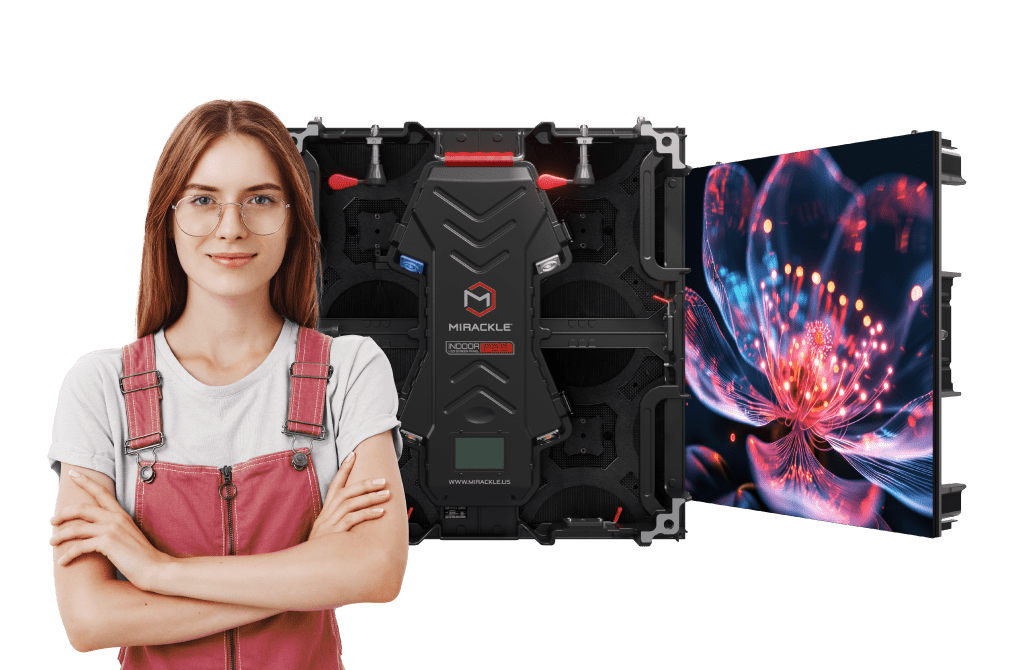
High-End LED Technology: Color, Brightness, and Visual Control Matter on Set
Brightness Should Support the Lighting Design
In a professional studio, no visual element operates alone. The display must work with key lights, fill lights, practical lighting, set materials, and camera exposure.
Excessive brightness can create clipped highlights, unwanted spill, or an image that dominates the talent. Precise control is more valuable than maximum output, because it allows LED displays to support the lighting design instead of fighting it.
When brightness, white balance, and exposure are coordinated, the scene feels more believable. The goal is balanced illumination, not raw intensity.
Content Needs to Stay Clean Across Angles
Production cameras rarely remain fixed directly in front of the background. Sliders, cranes, handheld movement, and multi-camera coverage constantly change the viewing angle.
Wide viewing performance helps LED display panels maintain consistent color, contrast, and brightness across those positions. This continuity protects the look of the scene and reduces visible shifts between shots.
Viewing angles in the 140° to 160° range are common in professional products, but specifications should still be tested in context. Real camera placement matters more than a number on a data sheet.
Smooth Motion Helps the Final Image Feel Professional
Viewers may not know why motion looks wrong, but they notice it immediately. Stutter, tearing, or uneven playback can make virtual backgrounds and animated graphics feel artificial.
LED screens depend on refresh rate, processing, source quality, and correct synchronization to reproduce motion cleanly. Each part of the chain affects the final image, especially during pans, transitions, or fast-moving content.
When motion remains smooth, the technology recedes into the background. The display supports the story instead of calling attention to itself.
The LED Display Control System Is Part of the Production Workflow
Video Processing Has to Be Reliable
The visible surface is only one part of the system. Behind it, processors, sending cards, receiving cards, control software, and signal distribution determine how content reaches LED panels.
A reliable processing chain handles scaling, nonstandard resolutions, signal routing, and playback across multiple cabinets. Small inconsistencies can become obvious on camera, so control hardware deserves the same attention as the display itself.
Platforms such as NovaStar are widely used because they support professional configuration and control. The best setup is the one that remains stable under the exact demands of the production.
Synchronous Systems Are Often Essential for Live Workflows
In live production, content may come from cameras, switchers, media servers, graphics engines, or real-time rendering platforms. Every source must remain in sync. Synchronous systems allow LED video walls to receive and display those signals as the program unfolds.
Continuous timing is essential in broadcasts, corporate events, worship productions, hybrid events, and XR stages. Delays, dropped frames, or signal interruptions can break visual continuity.
For workflows that change second by second, synchronization is not an optional upgrade. It is a core operational requirement.
Asynchronous Systems Still Have a Place
Not every application requires a live feed. Programmed loops, permanent branding, studio signage, and simple scenic backgrounds can often run effectively on asynchronous systems.
These setups store content locally and reduce dependence on a continuous external signal. That simplicity can improve efficiency when real-time switching is unnecessary.
The choice is not about which system is universally better. It depends on how the content will be created, updated, and controlled.
Integration Matters as Much as the Display Itself
Modern productions combine cameras, media servers, audio systems, tracking tools, streaming platforms, graphics engines, and real-time software. Each connection affects the workflow. LED displays and connected LED devices must fit into that ecosystem without adding unnecessary complexity.
In XR and virtual production, integration with tools such as Unreal Engine may be as important as the physical specifications of the display. A technically strong product can still underperform if it does not fit the workflow.
The real objective is coordinated performance. Every component should contribute to one stable, credible image on camera.
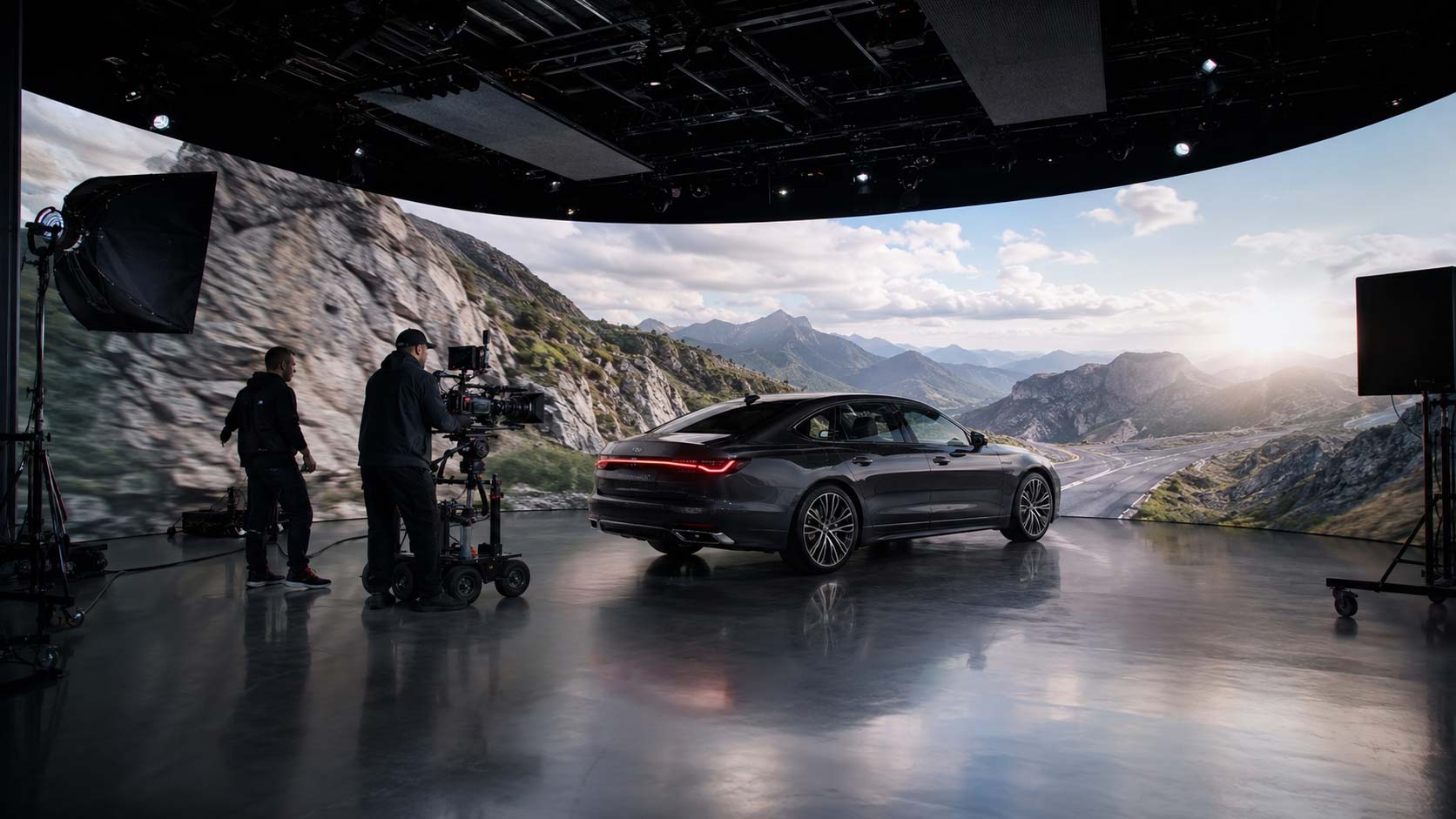
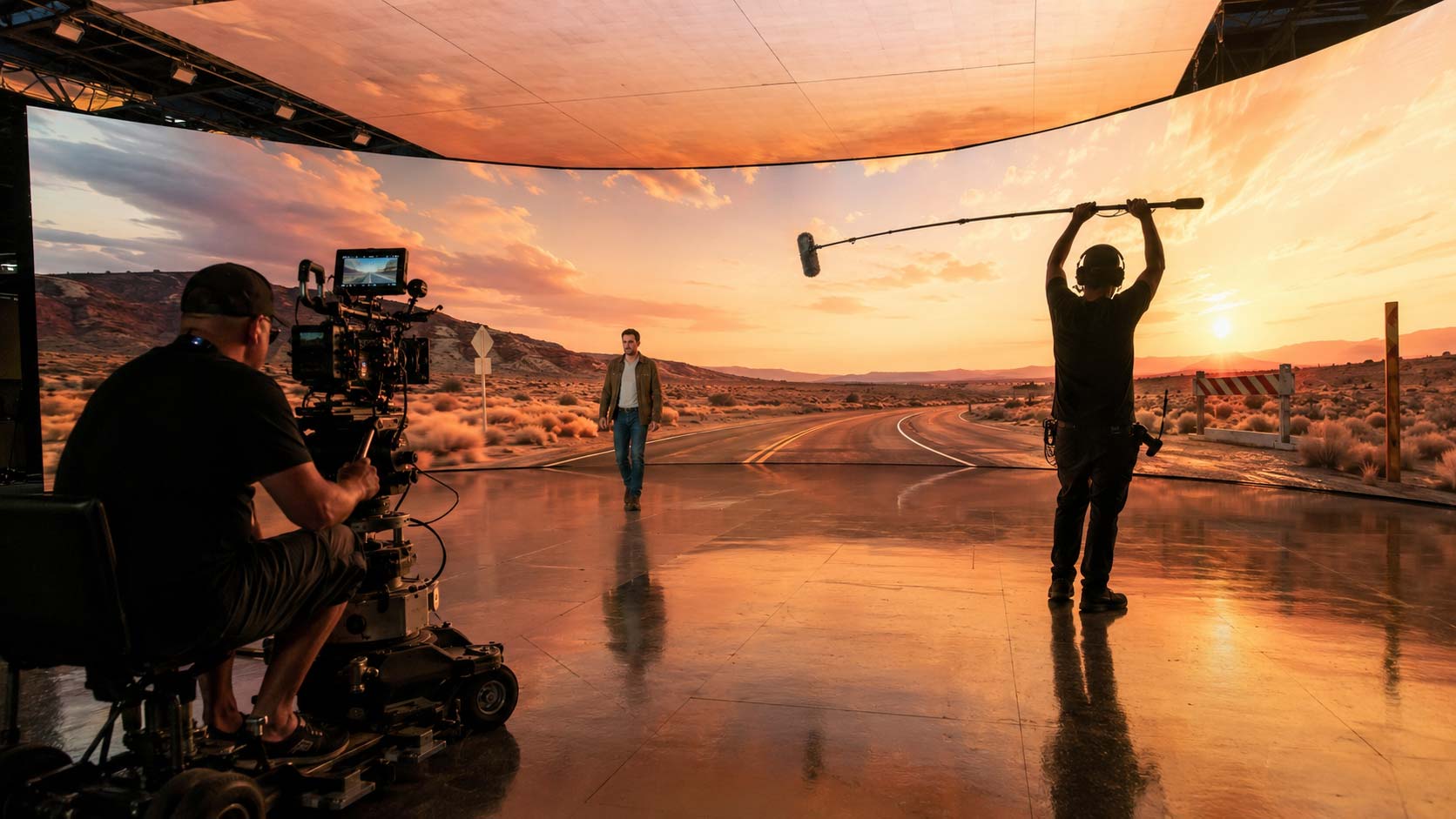
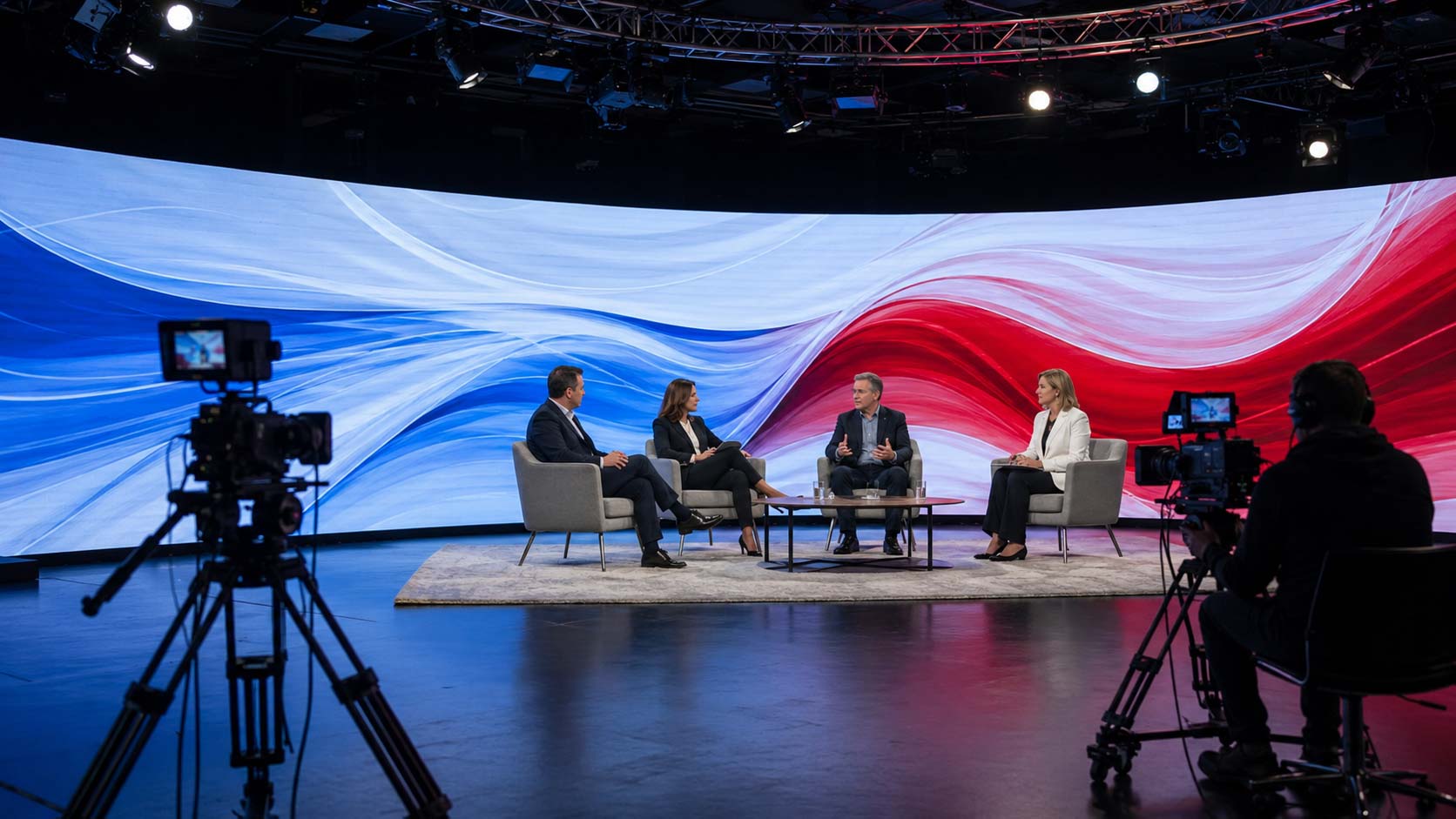
Installation and Serviceability Affect Production Schedules
Studio Installations Need Clean Access and Minimal Downtime
Downtime can delay crews, talent, studio bookings, and live schedules. For that reason, service access should be considered during system design, not after installation.
Full front service allows technicians to reach modules, power supplies, and receiving cards from the viewing side. Faster access means shorter interruptions and less need to dismantle surrounding structures.
Magnetic modules can further simplify replacement and inspection. For permanent LED walls, serviceability has a direct impact on long-term operating costs.
Lightweight Panels Help With Stage Design
Studios often change layouts between projects. A space may host an interview one day, a product launch the next, and an XR shoot later in the month.
Lightweight LED display panels are easier to transport, assemble, and reposition. Lower weight gives designers more flexibility while reducing the burden on support structures and installation crews.
This is especially useful for touring sets, temporary stages, and custom scenic builds. Practical handling can expand the creative options available to the production team.
Mounting Depends on the Creative Use
Mounting should reflect both the physical space and the creative role of the system. Wall-mounted systems suit permanent studios, ground-supported structures offer flexibility, and flown installations can create suspended or layered compositions.
LED screens may also be used as ceilings, side walls, or wraparound environments in immersive stages. The mounting method should support the visual concept without compromising access, alignment, or safety.
The strongest installation is not simply the most complex. It is the one that fits the creative brief and remains practical to operate.
Reliability Is What Makes the LED Screen Production-Ready
Durability Still Matters Indoors
Indoor production spaces can be demanding. Repeated setup, heat from lighting, transport, vibration, dust, and long operating hours all place stress on LED video walls.
Build quality, component protection, and consistent manufacturing help the system perform reliably over time. Durability is especially important when the display is central to the production schedule.
Depending on the environment, ratings such as IP45 or IP65 for outdoor LED screens may add useful protection. The required level should match the real conditions, not an assumption that every indoor studio operates the same way.
Mirackle: Better ROI, Better Production Value
In broadcast and virtual production, return on investment extends beyond hardware cost. LED walls can reduce location expenses, replace physical sets, speed up scene changes, and support multiple types of content in the same space.
A single installation can serve interviews, corporate presentations, commercials, live programs, and virtual environments. That reusability can improve both production efficiency and creative range.
Long-term value also depends on support, service, and warranty coverage. Mirackle backs its LED solutions with a five-year warranty, helping teams plan with greater confidence when LED technology becomes part of a critical workflow.
Mirackle provides LED panels and related services for studios, events, broadcast environments, and virtual production. The focus is not only on technical specifications, but on building dependable systems that deliver strong visual performance, practical flexibility, and sustainable value.
Because for LED video walls, success isn’t judged the day they turn on. It’s judged every day they keep performing without becoming a problem.