
Why Smaller Pixel Pitch Doesn’t Mean a Better LED Display
Smaller is not automatically better. In LED technology, a lower pixel-pitch number means more pixels within a given area, which can improve close-range detail. It does not, however, guarantee that the system will perform better in the space where it will actually be used.
Pixel pitch is only one part of the decision. It measures the distance, in millimeters, from the center of one pixel to the center of the next. The right specification also depends on viewing distance, screen size, content, lighting, installation conditions, and budget.

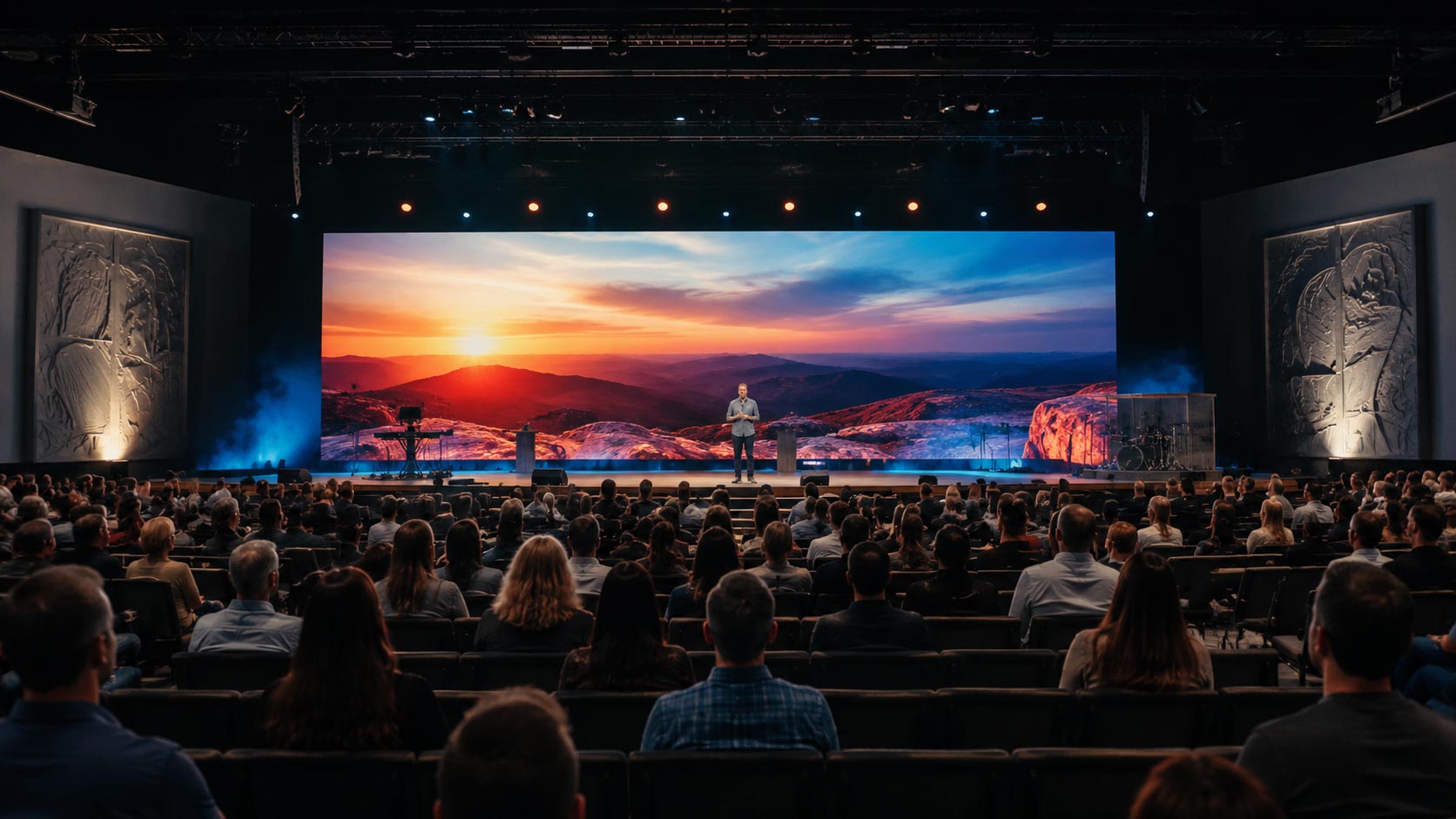
The goal is practical visual performance, not the lowest number on a specification sheet. Well-designed LED displays balance image quality, durability, operating efficiency, and long-term value. Choosing correctly can deliver a better result while avoiding unnecessary equipment and processing costs.
This guide explains how to evaluate the complete system. By understanding how custom LED video walls perform in real environments, buyers can select a configuration that supports their audience, content strategy, and business objectives without paying for resolution no one will notice.
The Best LED Wall Starts With the Viewing Experience
The audience should guide the specification. The best LED walls are not necessarily those with the highest pixel density. They are the ones that look clear, comfortable, and consistent from the locations where people will actually view them.
Viewing Distance Changes Everything
Minimum viewing distance is one of the most important planning factors. Installing an ultra-fine pixel pitch for an audience positioned far from the screen can raise the project cost without creating a visible improvement.
Four elements should be evaluated together:
- Pixel pitch and distance: A finer pitch is most valuable when viewers are close. As distance increases, individual pixels become less noticeable, so a moderately larger pitch can still produce a smooth image.
- Physical screen size: Larger LED video walls contain more total pixels across the full canvas. Large LED walls on a stage may achieve strong overall definition without requiring the finest available pitch.
- Total resolution: Full HD or 4K is determined by the complete canvas, not pixel pitch alone. The screen dimensions and pitch must work together to reach the required resolution.
- Content type: Detailed text, data, and close-up camera feeds require more precision than abstract motion graphics, concert backgrounds, or advertising viewed from a distance.
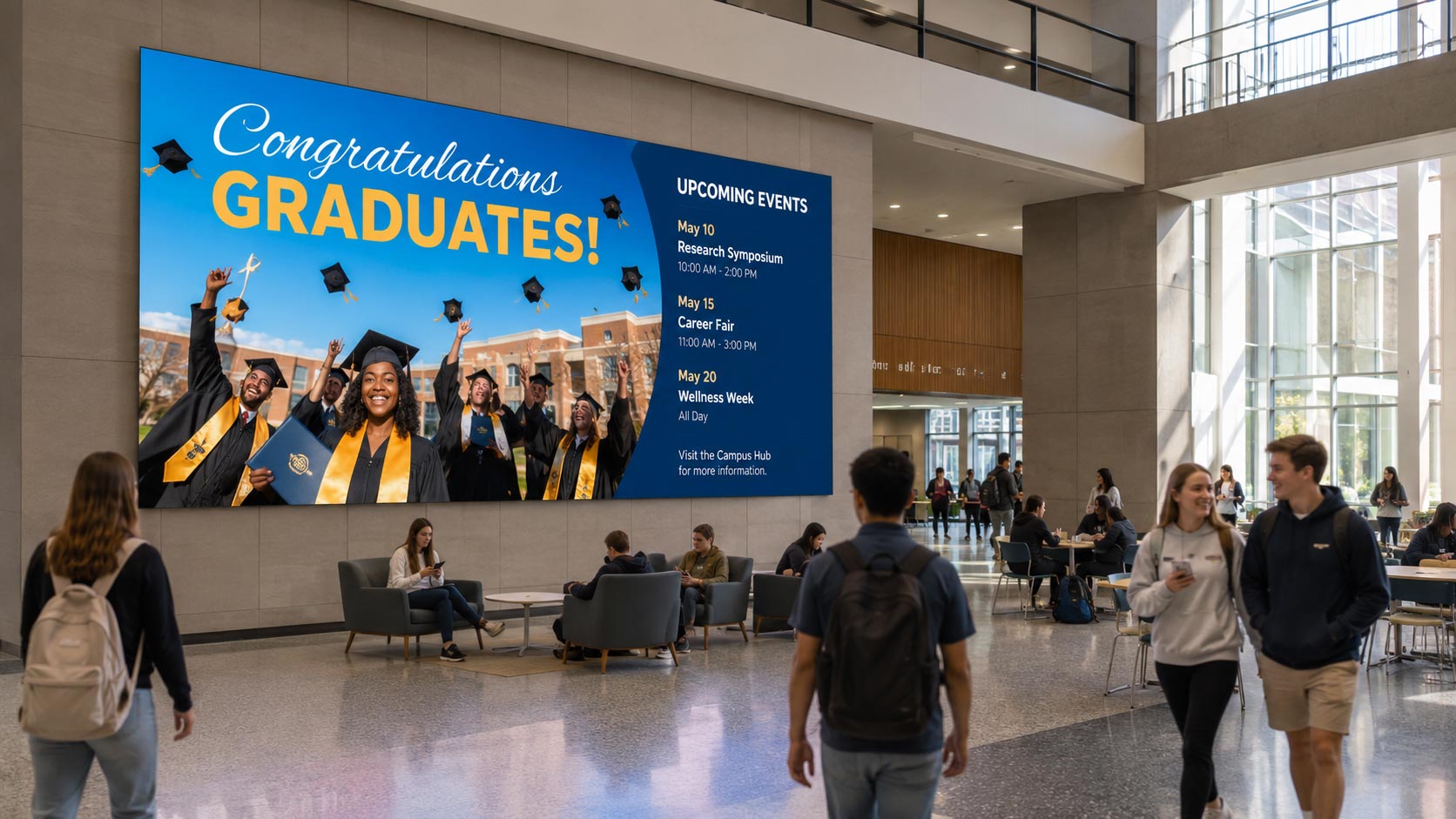
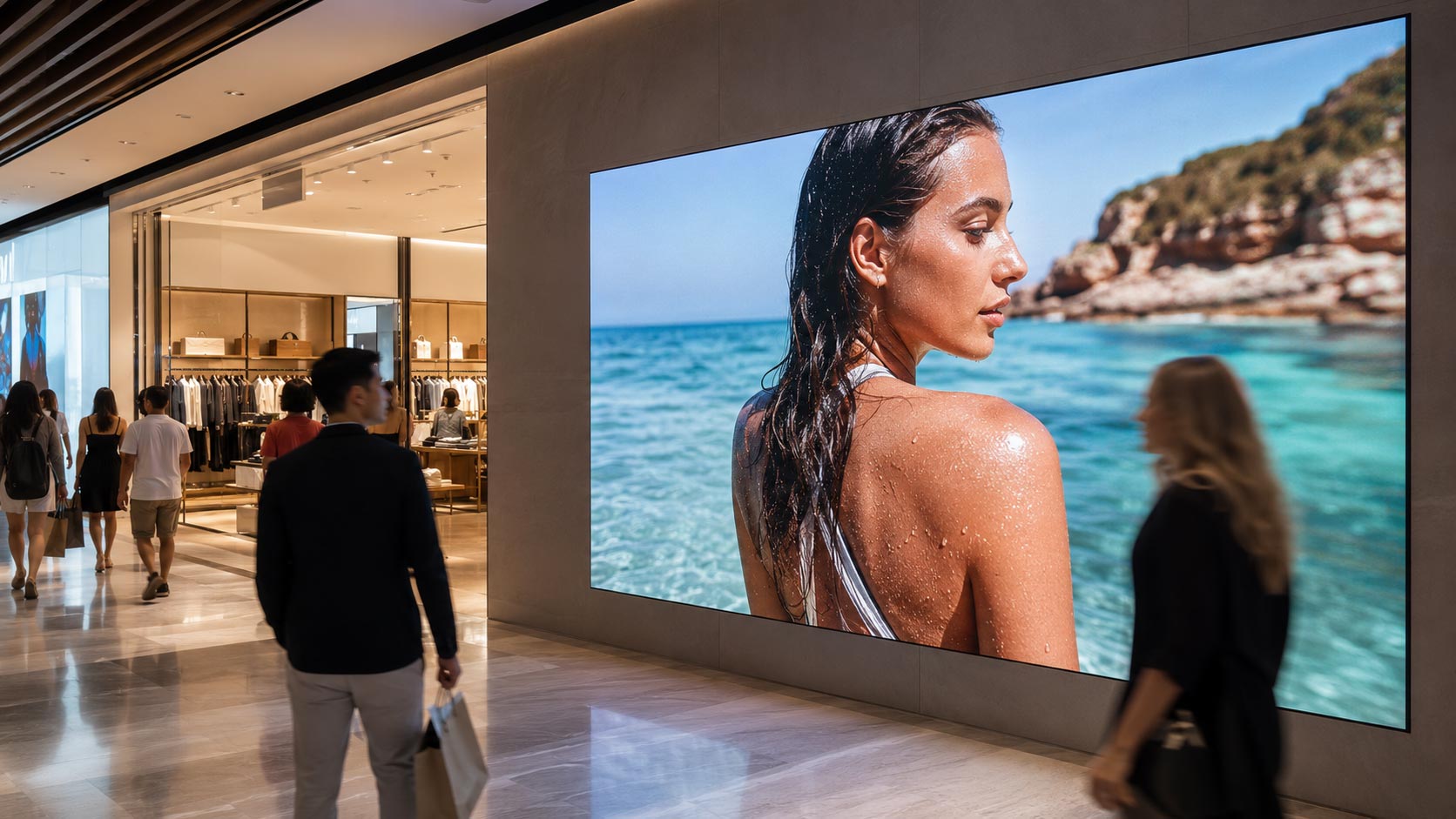
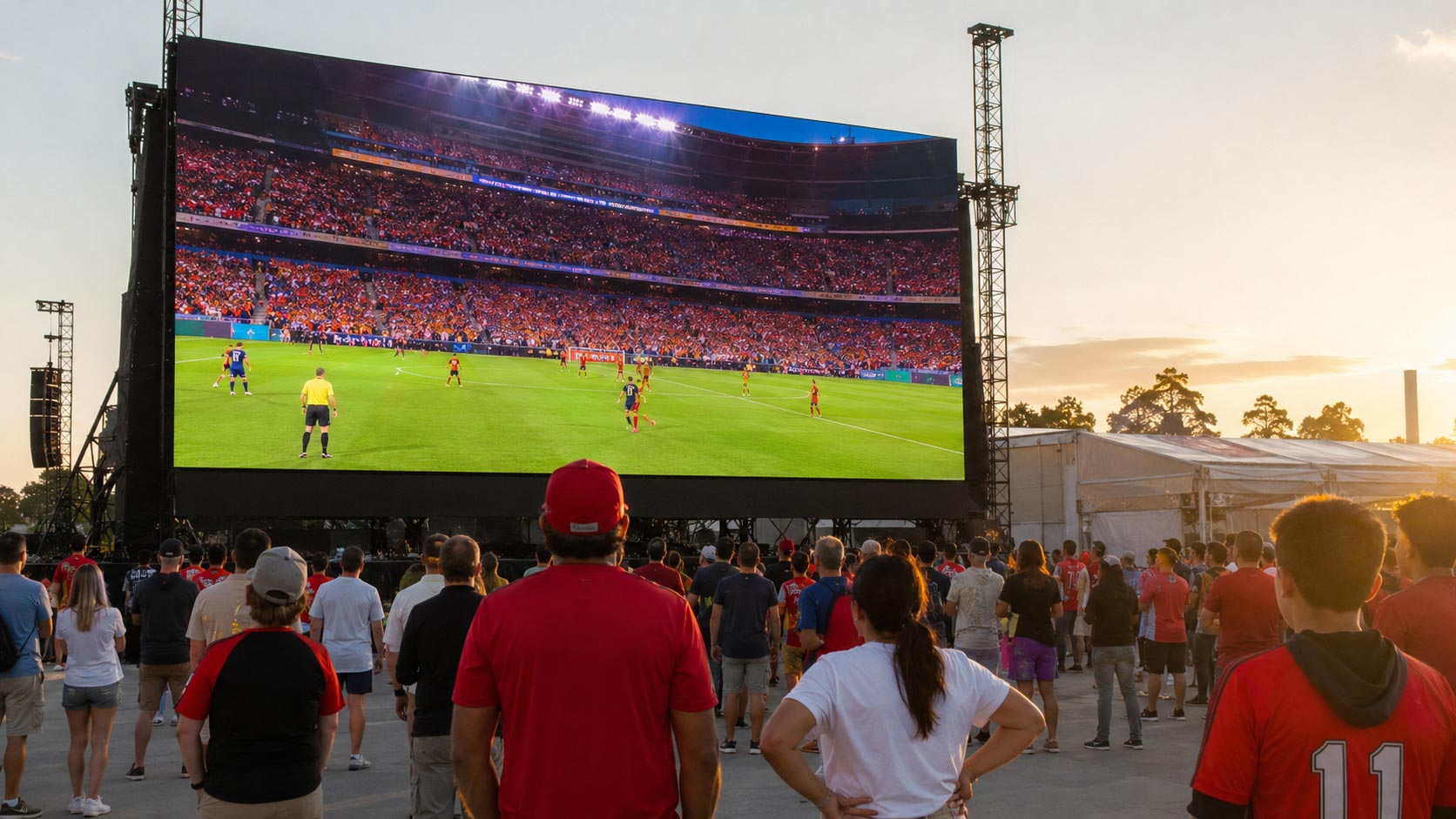
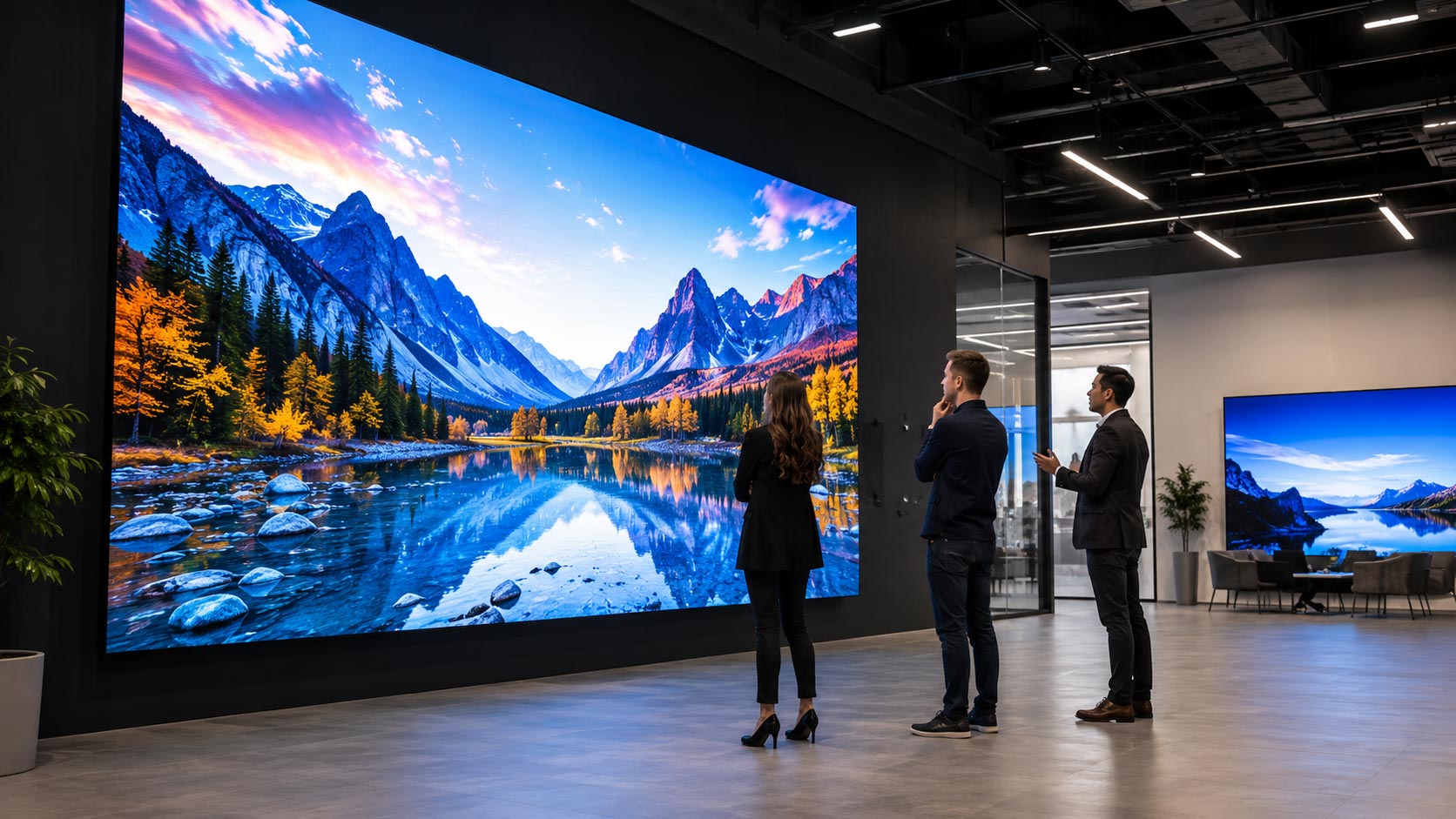
Image Quality Is More Than Pixel Density
Component quality has a major impact on the final picture. Contrast, color consistency, grayscale performance, calibration, and video processing can make LED display panels look refined or visibly uneven, regardless of pitch.
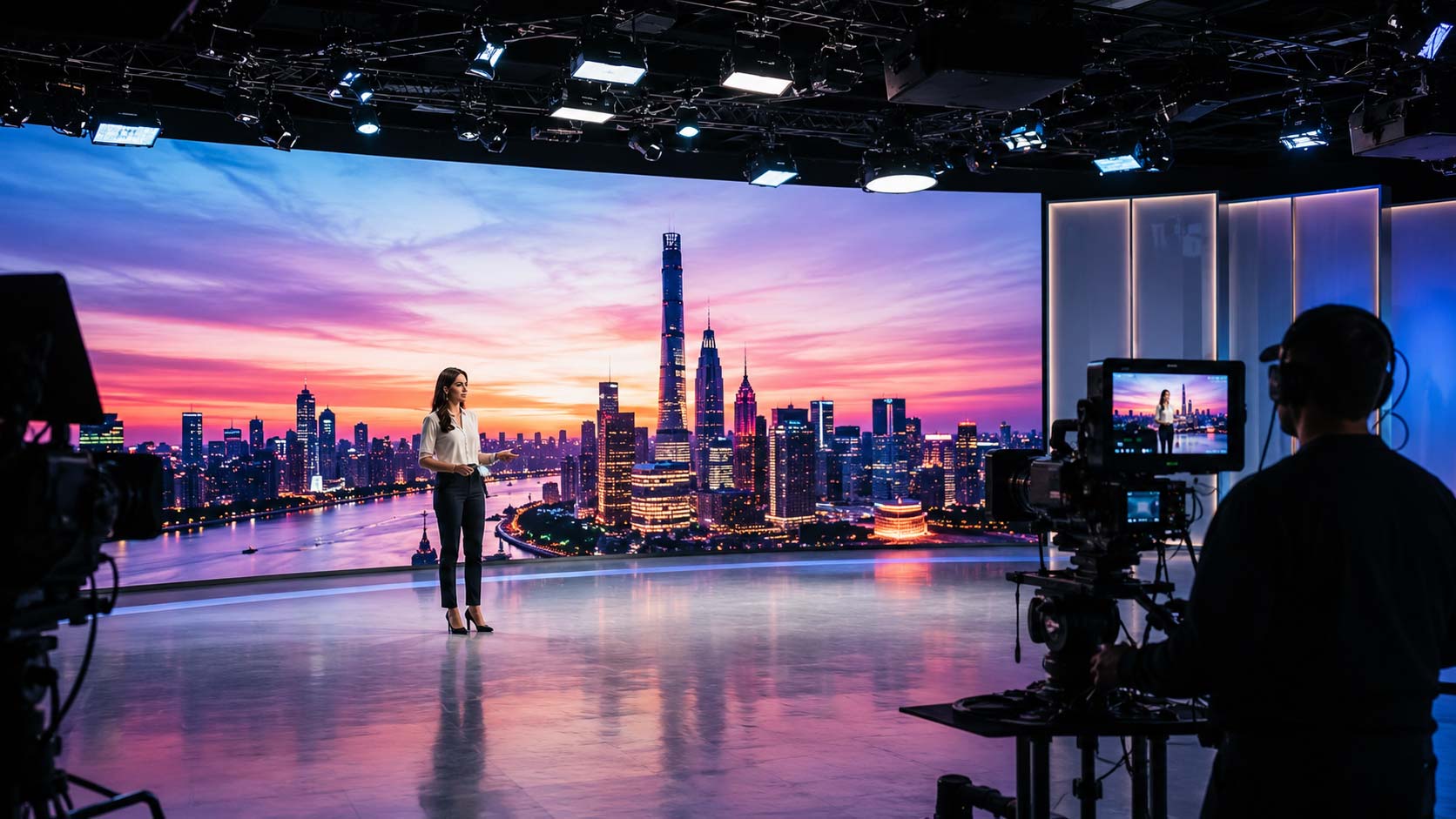
Refresh rate is especially important for content captured on camera. Professional systems commonly use high refresh rates to reduce flicker, scan lines, and other artifacts in livestreams, mobile videos, and broadcast footage. For churches, studios, events, and social media production, camera-ready performance is essential.
Wider Visibility for Larger Audiences
A strong image should remain consistent beyond the center seat. LED screens with wide horizontal and vertical viewing angles help preserve brightness, color, and contrast for people positioned along the sides of a room.
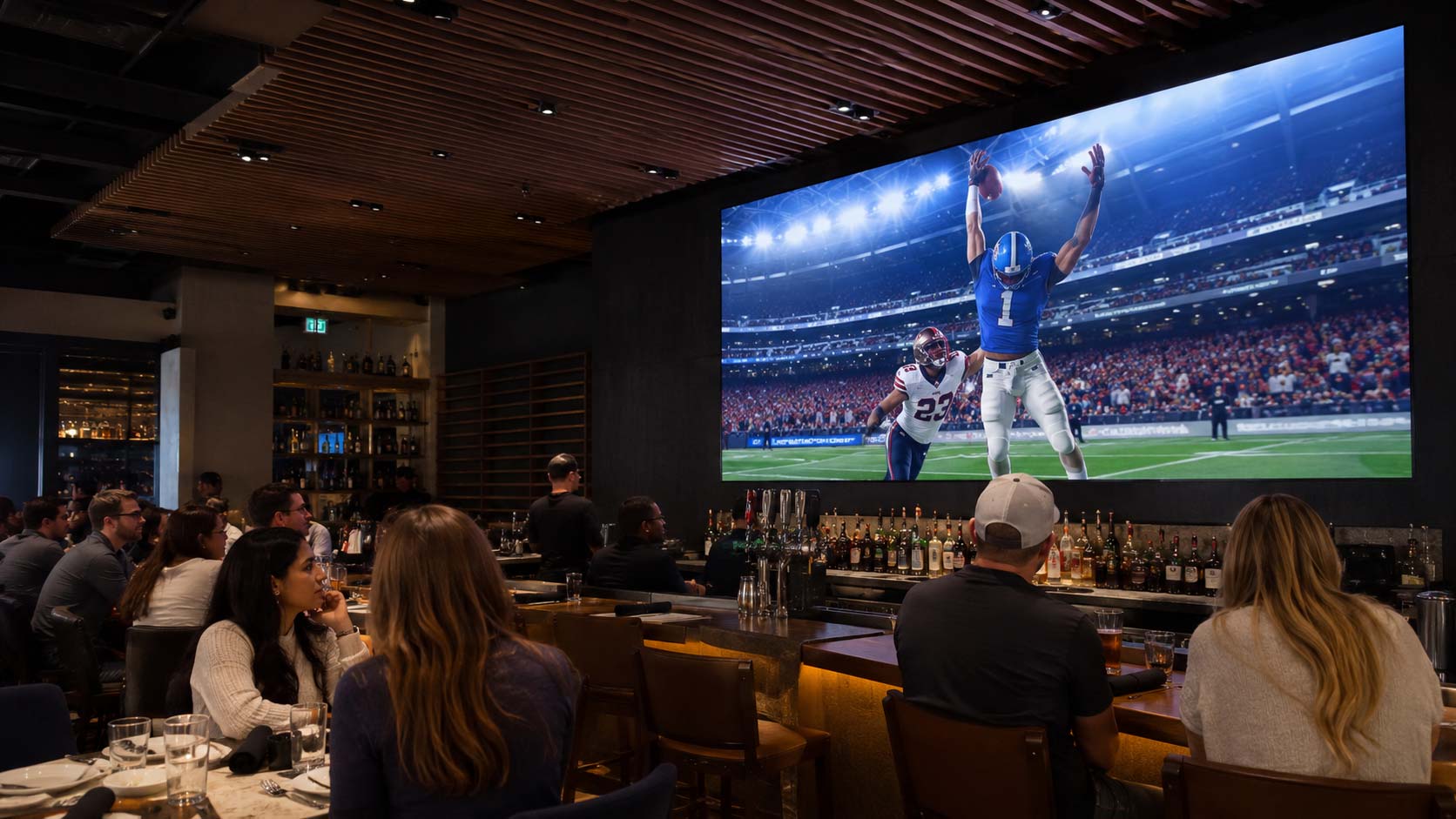
This matters in auditoriums, churches, conference rooms, shopping centers, and live-event venues. A properly designed system allows more people to read presentations, follow video content, and engage with the experience. Mirackle’s commercial indoor systems, for example, combine wide viewing angles with professional refresh performance because overall audience coverage matters more than a single specification.
Stop losing customers to an outdated site. Boost your business with a fast, modern, and high-selling website.
Real-World Conditions Matter More Than a Single Specification
A specification sheet cannot reproduce the conditions of an actual installation. Sunlight, ambient lighting, dust, moisture, heat, operating hours, and maintenance access often have a greater effect on long-term performance than pixel pitch. Reliable LED solutions must be configured for the environment in which they will operate.
Brightness Must Adapt to the Environment
More brightness is not always an advantage. LED panels that are too bright for a boardroom, studio, or lobby can create glare and eye strain. LED displays with insufficient output may appear washed out near windows or in direct sunlight.
Brightness should match changing ambient light. Automatic or scheduled brightness control can maintain comfortable visibility throughout the day while reducing unnecessary power consumption. The result is more consistent viewing and more efficient operation
Indoor and Outdoor Displays Face Different Challenges
Indoor and outdoor systems require different construction. Indoor LED screens generally prioritize low weight, quiet operation, and close-range image quality. Outdoor models must withstand rain, dust, humidity, wind, temperature changes, and prolonged exposure.
The IP rating helps define the appropriate level of protection. IP45 may suit certain protected indoor or semi-sheltered settings, while IP65 is widely used for outdoor LED display panels because it provides dust protection and resistance to water jets.
Choosing the wrong enclosure can shorten the system’s service life. Moisture, dust, and heat can damage modules, connections, and power supplies. Durable cabinets, sealed components, and proper thermal management help LED panels remain stable year after year.
Efficiency Has a Direct Impact on ROI
The purchase price is only one part of the investment. Total Cost of Ownership also includes electricity, maintenance, labor, downtime, replacement parts, and processing requirements. Over-specified systems can cost more to purchase and operate without improving the audience experience.
Efficient hardware supports better long-term economics. Modern power systems, effective heat dissipation, and practical service access can lower energy use and reduce maintenance time. These factors are especially important for installations that operate many hours each day.
The best financial result comes from balance. Matching brightness, protection, processing, and pixel pitch to the actual application helps LED displays deliver reliable performance without unnecessary complexity. Mirackle approaches each project around measurable operational value rather than specifications for their own sake.
Performance Depends on the Entire LED Screen Ecosystem
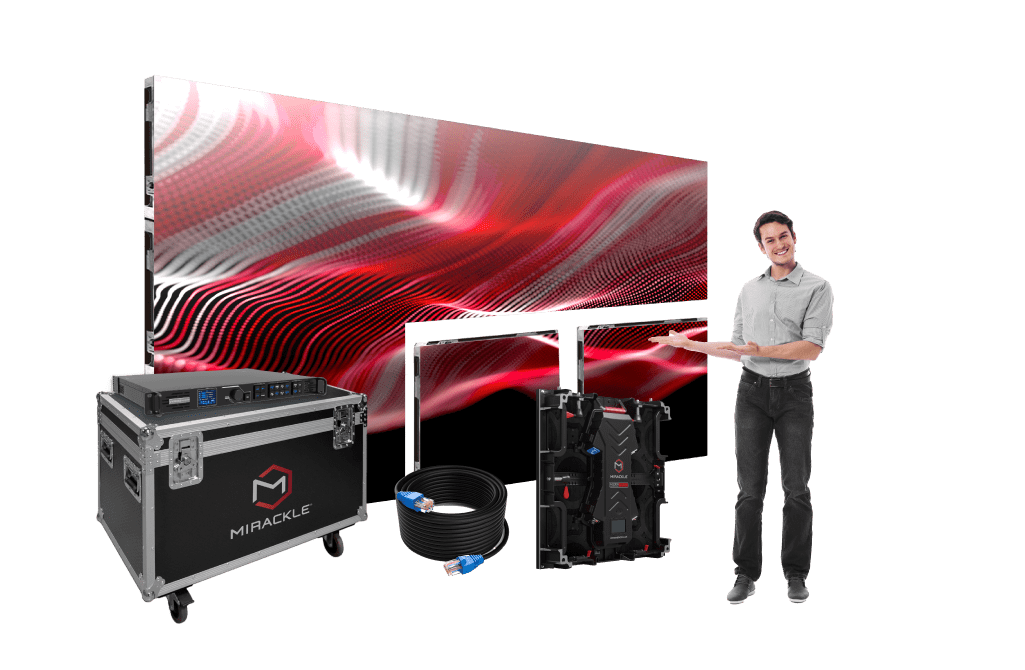
The display is the visible end of a connected system. LED devices rely on processors, sending cards, receiving cards, cabling, software, content sources, and power distribution. If one part is undersized or poorly configured, the complete installation can suffer.
The Processor Behind the Picture
The control system determines how content reaches the screen. Professional processors manage scaling, color calibration, synchronization, signal distribution, and source switching. Brands such as NovaStar are commonly used to support stable playback across LED display panels.
Fine pitch cannot compensate for weak processing. An inadequate processor may cause stuttering, lag, poor scaling, unstable color, or inconsistent playback. LED screens need processing capacity that matches the total resolution and content demands of the project.
Synchronous systems are designed for real-time content. They mirror a connected source such as a computer, camera system, or video switcher, making them suitable for concerts, live broadcasts, conferences, and worship services where timing matters.
Asynchronous systems are designed for scheduled playback. Content is stored on a controller and played without a continuously connected computer. This approach works well for digital signage, retail messaging, advertising, and recurring campaigns because updates can be managed efficiently.
Connectivity Should Follow the Content Strategy
The required inputs should be defined before the hardware is selected. A project may need cameras, switchers, computers, media players, digital-signage platforms, audio systems, or room automation. Each source must integrate reliably with the control workflow.
Pixel pitch should never be selected in isolation. Well-planned LED solutions align the processor, connectivity, resolution, and operating method with the content strategy. This complete approach helps LED walls deliver smooth playback, accurate color, and dependable daily operation.
Installation and Maintenance Shape Long-Term Performance
Good hardware still requires proper support. The long-term performance of LED video walls depends on structural engineering, mounting, ventilation, cable management, power distribution, and service access. A minor repair should not require dismantling an entire installation.
The Space Determines the Installation Method
Every venue creates different structural requirements. Weight, wall composition, ceiling load, local safety rules, available depth, and access routes should be reviewed before selecting the mounting method.
Ground-supported systems suit temporary or flexible installations. They use an independent structure and are commonly selected for stages, events, and locations where permanent wall anchoring is not possible.
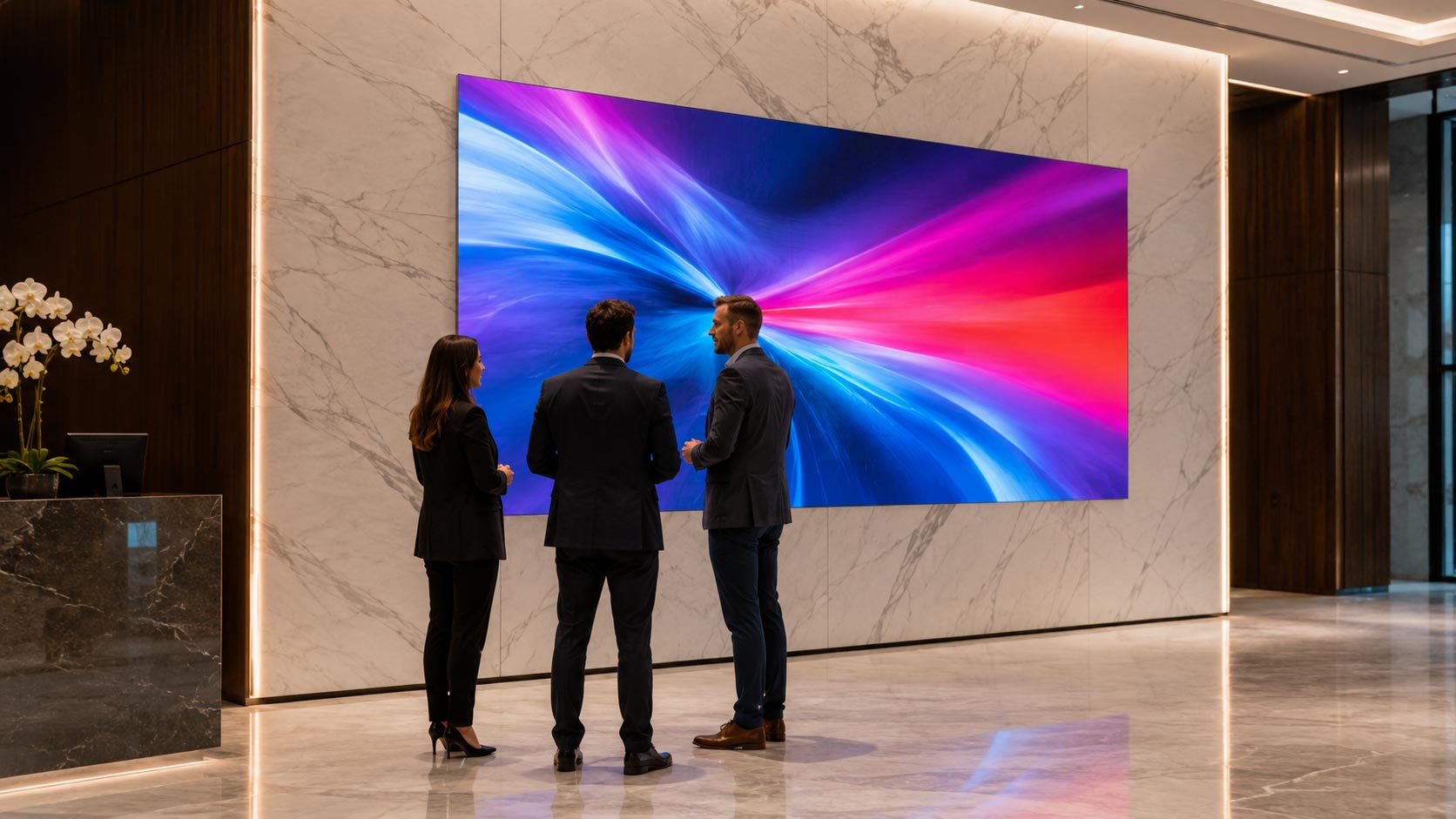
Wall-mounted systems create a clean, permanent finish. They work well in lobbies, retail spaces, meeting rooms, and corporate environments where LED walls must integrate closely with the architecture.
Flown systems are suspended from certified overhead structures. Convention centers, theaters, arenas, and large venues may use this method when floor space must remain open. Accurate load calculations and qualified installation are non-negotiable safety requirements.
Lightweight Systems Simplify Complex Projects
Lower cabinet weight can reduce project complexity. Die-cast aluminum construction may decrease transportation demands, assembly time, labor, and the need for structural reinforcement.
Lightweight does not mean fragile. Professional LED panels should combine manageable weight with rigidity, alignment accuracy, and reliable locking hardware. The objective is faster handling without sacrificing stability.
Service Access Can Prevent Expensive Downtime
Maintenance design directly affects operating costs. Full front service allows technicians to remove modules and certain internal components from the face of the screen, which is valuable when rear access is limited or unavailable.
Fast access helps protect revenue and communication. In lobbies, boardrooms, studios, churches, and retail environments, LED display panels can often be serviced without dismantling large sections or disrupting the surrounding space.
Modular construction also simplifies replacement. With magnetic modules, organized cabling, and accessible spare parts, LED screens can return to service more quickly. Mirackle prioritizes practical maintenance and reduced downtime across permanent installations.
The Right LED Wall Is the One Built Around Its Purpose
There is no universal pixel pitch for every project. The right LED technology brings together viewing distance, content, brightness, environmental protection, mounting, maintenance, processing, and budget. The system should adapt to the purpose of the space—not the other way around.
Avoid Paying for Performance You Cannot See
Over-specification is a common and expensive mistake. Selecting the smallest available pitch without a clear technical reason increases panel, processor, power, and control-system costs.
Distance can make additional pixel density invisible. When viewers are far enough away, a balanced configuration may appear just as sharp as a much finer one. Paying for detail the audience cannot perceive is not a meaningful upgrade.
Think Beyond the Initial Purchase
A professional evaluation should consider the full service life of the system. Buyers should compare the following long-term factors:
Future compatibility: Scalable hardware can support evolving software, content formats, and control requirements.
- Energy consumption: Efficient components can reduce monthly operating expenses during extended daily use.
- Maintenance access: Modular front- or rear-service designs can shorten repairs and minimize disruption.
- Technical support and spare parts: Reliable assistance and compatible replacement components help preserve consistent performance.
- Future compatibility: Scalable hardware can support evolving software, content formats, and control requirements.
Operational confidence adds lasting value. Mirackle backs its products with a five-year warranty, supporting customers with technical expertise and dependable hardware throughout the investment period.


Design the System Around the Result
Successful system design begins with the desired outcome. First define what the audience must see, how close viewers will be, what content will run, and how the space will operate. Then determine pitch, resolution, brightness, IP rating, mounting, processing, and control.
Mirackle provides more than individual products. The company helps configure LED video walls, LED displays, and LED panels around each space and budget. Rather than recommending the most expensive specification, the goal is to create a reliable visual system that delivers the right result.
Because for LED video walls, success isn’t judged the day they turn on. It’s judged every day they keep performing without becoming a problem.