
How Modular LED Display Panels Are Revolutionizing Installation Workflows
Not that long ago, installing LED screens could feel like a slow-motion puzzle: heavy components, tight timelines, and a long list of “if this goes wrong, everything shifts.” Integrators and technicians weren’t just mounting hardware; they were juggling multiple variables at once: crew availability, rigging windows, cable routing, rear access clearance, and the pressure to avoid downtime once the space went live. When something didn’t line up, rework wasn’t a minor inconvenience; it often meant lost hours, schedule conflicts, and frustrated stakeholders.
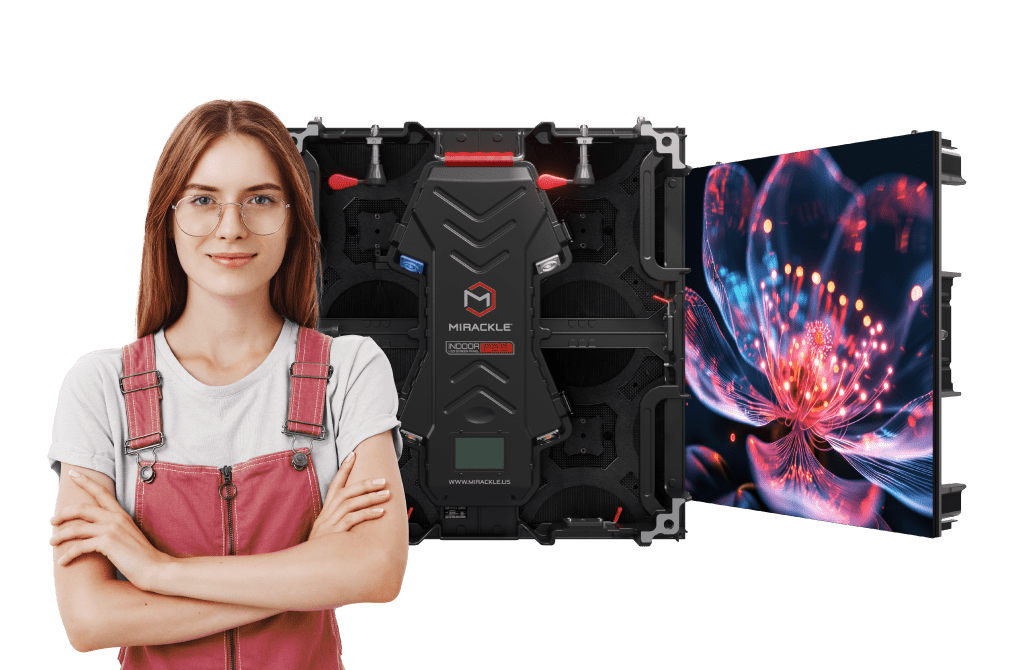

That’s why “workflow” has become such a real concern across the industry. End customers feel it because every extra hour of disruption impacts business operations and long-term ROI. Install teams feel it when complicated structures turn simple service tasks into partial tear-downs. And planners feel it when modern projects demand consistency across LED video walls, without letting labor costs spiral.
The shift toward modular systems didn’t just improve how installations look once completed. It changed how projects are staged, assembled, serviced, and expanded; making the entire process more predictable, more repeatable, and far easier to scale.
How LED Modular Design Changes the Entire Installation Process
Modular design sounds straightforward on paper; until you see its impact on real installation timelines. Instead of treating a display as one fragile, all-or-nothing build, modular systems break the process into repeatable steps: plan, assemble, align, test, and service.
In real environments, that approach allows projects to move faster while still meeting performance expectations like resolution and refresh rate. It also reduces the temptation to overbuild structures “just to be safe.” That’s one reason modular systems now connect such a wide range of LED display panels for retail spaces, corporate interiors, houses of worship, studios, and live events.
What “modular” really means in real-world projects
On site, modular means the build behaves like scalable blocks. You can start with a defined size and adapt from there. Need a wider canvas? Add columns. Need a tighter footprint? Reconfigure using the same components.
That flexibility shows up in practical details: lightweight cabinets that are easier to handle, panel-by-panel installation that reduces risk during assembly, and smarter planning around pixel pitch so viewing distance and image clarity actually match the room. Modularity also makes it easier to reach the right resolution for the content goal, instead of forcing a one-size-fits-all solution.
Flexibility before, during, and after installation
Before installation day, modular planning simplifies drawings, packing lists, and labor forecasting. During the build, crews can work in sections, confirm alignment as they go, and maintain a cleaner, safer job site.
After installation, the benefits continue. Expansion doesn’t automatically mean replacement. If a client wants a larger canvas or a new aspect ratio later, it’s often a controlled upgrade; not a full teardown. That long-term flexibility is one of the quiet strengths behind modern LED panels: the workflow remains stable even as the project evolves.


Streamlining LED Wall Installation Workflows on Site
On site, modular LED screen design show their real value. The goal isn’t simply to install faster—it’s to reduce friction: fewer alignment issues, fewer surprises, and fewer moments where the team has to stop and improvise. When systems are designed for repeatability, installers spend less time fighting the build and more time finishing cleanly.
Faster assembly with smarter panel systems
Modern cabinets often shorten assembly time through small but meaningful design choices: magnetic modules, precise interlocking edges, and consistent cabinet geometry that helps panels naturally fall into place. When alignment works with the installer (not against them) hours of micro-adjustment disappear.
That advantage becomes even more noticeable as the wall grows. Large surfaces magnify tiny inconsistencies, so anything that improves repeatable alignment improves the entire workflow.
Simplifying mounting methods across environments
Another major workflow improvement comes from using one core system across multiple installation types. The same modular structure can support ground support, wall-mounted, or flown method configurations depending on the venue and load requirements. Instead of switching product families for every scenario, teams can standardize their process: familiar handling, known connection points, and predictable rigging steps. That consistency reduces training time and helps projects stay on schedule.
Full front service and easier maintenance access
Rear access used to be a hidden workflow cost; especially in architectural spaces with limited depth. With full front service designs, many installations no longer require large service corridors behind the wall.
For operations, this changes everything: quicker maintenance, simpler planning, and far less disruption for the end user.
Smarter Control, Cleaner Workflows with LED Technology
A clean LED wall installation doesn’t end when the final panel is mounted. If content control is confusing or unstable, the project still feels unfinished; especially when multiple teams depend on reliability.
That’s why today’s best installations treat control as part of the workflow itself. Hardware selection, signal paths, and configuration are planned early so the system goes live smoothly across LED technology.
Centralized control systems that reduce complexity
Most modern systems rely on a defined control chain: a video processor paired with a sending card (commonly Novastar) to manage signal distribution and scaling. When this chain is properly designed, troubleshooting becomes faster and daily operation far less stressful.
It also creates consistency, allowing the system to behave the same way whether it’s running a keynote presentation, digital signage content, or a live camera feed.
Synchronous and asynchronous configurations in real use
Different environments require different approaches. Live events and studios often rely on synchronous systems, where real-time inputs must stay perfectly aligned. In contrast, retail or corporate spaces may benefit from asynchronous systems that run scheduled content independently.
Choosing the correct setup early prevents last-minute rewiring; and the familiar panic of asking, “Why isn’t this playing?”
Integration with software, inputs, and external systems
Modular workflows work best when LED walls integrate smoothly with the rest of the ecosystem: switching systems, playback software, external processors, and supporting hardware technologies.
When that integration is seamless, the wall becomes reliable instead of demanding attention. The technology fades into the background; which, in practice, is exactly what a successful installation should do.


Partner With Us for End-to-End Service: Consultation, Support, and Expert Installation

Reliability, Durability, and Long-Term Planning
LED display installation workflows don’t stop on day one. They extend into years of operation, maintenance, and performance stability. Reliability is a workflow decision; because every failure brings labor costs with it.
That’s why planning LED panels now includes durability, service strategy, and long-term visual consistency from the very beginning.
Designed for different environments
Indoor and outdoor environments introduce very different challenges. Weather exposure, temperature variation, and moisture all affect system longevity, which is where ratings like IP45 and IP65 matter; not as marketing claims, but as practical thresholds for reliable operation. Choosing the correct protection level early helps avoid issues that turn into emergency service calls later.
Visual consistency across large surfaces
Many workflow problems appear months later as image issues: brightness inconsistencies, visible seams, or uneven performance across the wall. Features like wide view angles (140°–160°), stable refresh rate, and autoadjustable brightness help minimize these follow-up adjustments. The result is fewer return visits and a smoother handoff to the client.
Building systems meant to last
Long-term planning also means protecting the buyer’s investment. A 5 year warranty significantly changes the risk equation, particularly for high-visibility installations where uptime is non-negotiable. When durability is combined with accessible service design and consistent performance, the ROI becomes easier to justify: fewer disruptions, fewer maintenance hours, and systems designed to stay in operation; not constantly be repaired.
The Future of Installation Workflows Is Modular
The biggest shift happening today is philosophical. Projects are increasingly designed from the workflow backward. Instead of asking only, “How will it look?” teams now ask, “How will we install it cleanly, service it efficiently, and expand it later without chaos?”
That mindset favors partners who understand real installation pressure; tight timelines, access limitations, rigging constraints, and control-room realities.
This is where Mirackle stands apart as both a manufacturer and a provider. Rather than simply shipping products, they design and support modular systems that make LED video walls easier to install, easier to maintain, and easier to scale… Also, supported by practical guidance, responsive technical support, and a workflow-first approach that installers and end users genuinely experience.

Virtual production is no longer defined by budget size, but by vision…And the tools chosen to bring that vision to life.